Sunday, May 2, 2010

Reparations demand never a blame-game

Biko Agozino

The announcement of 'reparative actions' funds for slavery by Harvard University raises questions for Dr. Henry Louis Gates Jr. whether he supports the symbolic 'reparative actions' funds being set up by some universities and whether he would support awarding some of those funds to African universities or African students? I raised this question for Brown University in a written question when the draft report on slavery and the founding of the university was being discussed in 2006 but the response was that they were not interested in reparations because some people regard the demand as 'foolish' or unworkable. However, in the published version or the report, they critiqued my concept of reparative justice a lot (without attribution to me) especially in the 2021 second edition, showing the campaign by students at Brown in support of reparative justice. The University of Glasgow later adopted the concept of reparative justice when they endowed a fund for The University of the West Indies. Harvard comes close by adopting the term, 'reparative actions'. Do you support or oppose reparative justice and why?

Let me start by saying that the 2010 opinion by Gates represents an advancement on his PBS series in the sense that he did not say a single word about reparations in his six hours of documentary and he was called out on that. Now that he has commented on the issue, he has taken another step forward by limiting his conspiracy theory of slavery to the elites and not to all Africans as appeared to be the case in the Wonders of the African World where he asked ordinary Africans what it felt like to see a descendant of one of those that they supposedly sold long ago. These baby steps forward appear to be too little too late especially because he also took massive leaps backward by blaming Africans while calling for an end to the blame-game. 

What Gates left out and what the discussion is ignoring is that Africans fought against slavery as much as they could, a fact that historians narrate with indications that women fought as bravely as the men to prevent our people from being captured during the raids. Once we give credit to African masses as the warriors against slavery that they were, then we realize that the demand for reparations is neither a game nor a blame-game as Gates and his critics seem to imply.

I disagree with Henry Louis Gates Jr. because his title implies that the demand for reparations is a ‘blame-game’: it is not a game at all, it is a struggle for justice which every other racial group that suffered historic wrongs has waged with relative success except people of African descent, due mainly to racism. Secondly, it is not about apportioning blame because Africans are not interested in punishing those who enslaved our people, we are more interested in healing the festering wounds of slavery that people of African descent continue to suffer worldwide.

I also disagree with Gates when he suggests that Africans sold their own people into slavery. On the contrary, the Trans Atlantic Slavery was not a trade but a plunder in which a few members of the elite joined their European allies to terrorize fellow Africans. The majority of Africans fought against slavery in wars that were documented by even European historians, according to Walter Rodney.

Many of us were raised in Africa by parents who were never enslaved because their parents fought fiercely to prevent them from being captured and enslaved. So just like African-Americans, those of us whom Ali Mazrui called African-Africans are also survivors of the African holocaust. Today, a few elite Africans still rob fellow Africans blind and stash the loot in Europe and North America and just as in the past, the vast majority of Africans are activists against the modern slavery that our people still suffer while those of us fortunate to be abroad try to cushion the pain with the remittances that outpace foreign aid by miles.

As an African, I share the shame of brother Henry Louis Gates Jr. as he addresses this issue that some of my Diaspora Africana students (in the US and in the Caribbean) sometimes pose with passion; ‘were you not the people who sold us?’ Of course not, when we see you, we see fellow survivors for while you survived the war-crime raids, the genocidal middle passage, the rapacious plantations and Jim Crow lynch mobs, we survived the Holocaustal slave raids, murderous colonization, genocidal civil wars and slavish kleptocracy. As a person of African descent, Gates is entitled to wail with Peter Tosh and Bob Marley, ‘Look how long, 400 years, and my people still can’t see….’

But as a highly privileged scholar, Gates should help the Arab, European, and American regions that benefitted from the African holocaust to see that they owe reparations to people of African descent. Obama must not leave office without initiating the Fund for Africana Reparations (FAR) with emphasis on what I theorized elsewhere as ‘Reparative Justice’ with the acronym, DREAM: democracy (unity government for Africans at home and abroad and the abolition of racist laws that cause the disproportionate incarceration of Africans), reparations (obligated funding, not just optional aid), education (admission and funding set-asides, not just affirmative action that women and other minorities also enjoy), apology (more like the one from Congress will not hurt, but a global commemoration of Slavery Emancipation Day as a public holiday will be in order), and (visa-free) movement for Africans (other groups appear to enjoy this without earning the right the way Africans did).

No individual American, European or Arab will have to lose anything or pay any extra tax to make slavery reparations happen and the healing of Africans would benefit the whole world. No government on earth is returning money to taxpayers in these responsible regions and announcing that it is money saved from refusing to pay reparations to Africans.

Gates is not the first to admit that African states also owe reparations to Africans (but not just for slavery) and they could start making such reparations by abolishing the colonial boundaries and constituting the People's Republic of Africa to help us start healing the wounds of slavery, racist colonialism, neo-colonialism and patriarchal imperialism.

Saturday, May 1, 2010

The Debt Penalty: A Play


By Biko Agozino

The Debt Penalty is a fictional drama based on the Third World
debt crisis, using the metaphor of a heavily indebted but highly
profitable trading company to represent a Third World country.
The drama opens with the Directors of the company fighting over
the formula for the sharing of the company’s profits while the
workers protest about job losses and starvation wages. The
struggle among the Directors was used as an excuse by the Chief
Security Officer of the company to seize the administration of the
company and run it as the Sole Administrator. He offers the
workers and directors of the company an opportunity to debate whether the
company should accept more foreign loans but the workers win
the debate by rejecting conditions attached to such loans. This
change in administration did not bring any relief to the workers
and the unemployed who suffered even more deprivation under
the security administration and who were jailed for daring to
protest the hardship. The poor workers of the company also
owed rents to landlords, school fees for their children and loans
from the bank but only a Robin Hood type of character tried to
steal from the rich and give to the poor. He and his gang were
eventually arrested and sentenced to death but students freed
them just before they were executed by firing squad. They all
march to the company boardroom where the Sole Administrator
was about to hand over the company back to the disgraced
directors. They struggle and win over the control of the company
and promise to recover the loot stolen from the company by
previous administrations.

Copies are available through Amazon, major bookstores and through www.lulu.com

Sunday, February 7, 2010

Anambra as Litmus Test

ANAMBRA STATE AS LITMUS TEST

By Biko Agozino

"But my fear is that the furore that has grown around the Anambra voters register may become a battle ground, with the corpses that we did not see on February 6 showing up on the streets soon enough when the Obi administration chooses to organise the pending local government council elections in the state." This was the conclusion to Ruben Abati's 'Hope Deferred' assessment of the governorship election in Anambra State but where is Dr. Abati expecting those corpses to come from, his own village? 

Let me start with a confession of a personal momentary dilemma on December 11, 2009, after the Africana Studies Program at Brown University-hosted Achebe Colloquium on Africa. The event gave me the opportunity of shaking hands on the same day and in the same hall with some of the greatest heroes of Nigeria - Chinua Achebe, Wole Soyinka, Emeka Ojukwu, and Peter Obi. My dilemma was similar to that of one of the characters in Ngugi’s latest novel, The Wizard of the Crow. In the novel, a business man, Titus Tajrika, refused to wash his subsequently smelly and gloved hand after shaking hands with the corrupt head of state. Oh yes, I have been washing my hands since the hands that I shook were clean hands while Tajrika may have stopped washing his hand to retain the odour of contamination because he shook an unclean hand.

Anambra State of Nigeria was pronounced the litmus test for the wobbly Nigerian democracy at that first Achebe Colloquium at Brown University, Rhode Island and Anambra people have managed to pass the test to the delight of many Nigerians. The election of February 6, 2010, was not perfect but the results reflected the wishes of the majority of the voters to see Governor Peter Obi of the All Progressives Grand Alliance (APGA) continue in office for a second term. Based on his track records, this was a deserved victory for which I join many Nigerians in congratulating him.

During the Achebe Colloquium, I was surprised that no Nigerian present could challenge the views of presenters like the former US Ambassador to Nigeria, Mr Lyman (pronounced Lie-man) that Nigeria was becoming ‘worthless and irrelevant ‘to the outside world. Only after the moderator of that first panel, Professor Obiora Udechukwu, tried to prod the panel by asking if they could name any exemplary leader in present day Nigeria, did Professors Abiola Irele of Harvard and Richard Joseph of Northwestern suggest that Governor Tunde Fashola of Lagos State was their model leader.

I was surprised that no one mentioned Peter Obi, the governor whose state was the topic of the symposium, as an exemplary leader. So during question and comments, I told the colloquium that we should give credit to the people of Anambra state for producing some of the greatest achievers in Nigerian history. Without itemizing the giants that have emerged from that small geographical space called Anambra, I reminded the audience that the state has been offering a model of democratic leadership that the rest of the country should learn from.

Here was a state in which the mandate of the people was stolen and awarded to a medical doctor, Chris Ngige, mistaken for a stooge but who was later sabotaged when it turned out that he was out to satisfy such basic expectations as paying salaries on time and building roads rather than surrender the treasury to the self-styled godfather, Chris Ubah. He was kidnapped and the police withdrew security details from him but amazingly, he was not killed despite the destruction of government-owned properties valued at millions by those that Achebe called a clique formed for the destabilization of the state.

Meanwhile the actual winner of the 2003 election went to court rather than rent a crowd of thugs to kill and maim as is the practice in many parts of the country where elections are called do-or-die affairs and candidates are challenged to prove that they are ready to die for the positions that they seek. After one year of litigation, he won his mandate back through the rule of law and became the only minority party governor in the country with a State House of Assembly in which his party did not have a single member.

The question on many minds was how long he was going to last in office before the Peoples Democratic Party (PDP) dominated house would impeach him. And right on cue, they impeached him and also tried to impeach his deputy apparently to make way for the PDP Speaker of the House to become the governor. They miscalculated because the deputy was not automatically impeached when a governor is impeached and so they inadvertently gave Nigerians our first ever female state governor in the person of Obi‘s deputy, Dame Virginia Etiaba. Once again, the elected governor Obi went back to court and once again won back his mandate without a single life being lost!

I told the colloquium that it did not end there. The PDP Federal Government was bent on taking over the state and so a former personal assistant to President Olusegun Obasanjo was dispatched to contest the governorship of the state under the flag of the ruling PDP in 2007. The incumbent governor went to court to challenge the election because his term in office started when he won his first court battle to reclaim his mandate and so there was no vacancy at the time of the 2007 election. The Independent National Election Commission (INEC) ignored the injunctions and conducted a fake election in which the candidate of the ruling PDP, Andy Ubah, was declared winner despite complaints that no election took place. The declared winner was sworn in as governor but the legitimate governor avoided a campaign of violence and went back to court and again won back his mandate through the rule of law and without any loss of blood.

Before the February 2010 re-election of the highly achieving governor for a second term, the PDP candidate in the non-election of 2007 had gone to court to ask that he be declared governor in waiting and allowed to complete his term of office that was terminated when he was forced to hand over to the properly elected governor. The Supreme Court threw out the suit on the ground that governorship was not hereditary. By then he had lost the opportunity to contest the primaries of his party, PDP, for the 2010 election and true to character, PDP did not hold any primary elections but simply imposed a candidate on the party members. Two dozen other candidates who had bought primary elections nomination forms for millions of naira each but were denied an opportunity to contest the primaries went to court and won but a higher court over-ruled and said that the party had every right to select its candidate as it saw fit. Again, no one was killed even though the father of the imposed candidate was briefly kidnapped for ransom.

In the end, about two dozen candidates contested the 2010 governorship election with the PDP support split among the still relatively popular former governor (Ngige) who was rigged into office by godfathers but who chose to serve the people, the former governor who won a non-election (Andy Ubah) and the imposed party candidate (Soludo, a past governor of the Nigerian Central Bank) who won no primary election,  all representing three different parties, Action Congress, Labour Party and Peoples Democratic Party, respectively. I knew then that by splitting any support that PDP may have had that way, not to mention that the other two dozen candidates who had intended to contest the PDP primaries took their grievances into other parties and became their flag-bearers, the incumbent governor (Obi) was guaranteed a re-election on the platform of the APGA, despite a long-running split in the APGA party.

Once again, there was no loss of life, the election was said to have gone off peacefully, according to most observers. Some thugs were said to have snatched a few ballot boxes and many voters could not find their names on the inaccurate voters lists but the results reflected the wishes of the majority of the voters who cast votes. Governor Peter Obi gained over 90,000 votes for the APGA; Chris Ngige came second with over 60,000 votes for the AC and Charles Soludo came third with over 50,000 votes for the PDP. Andy Ubah, the Labour Party candidate, placed 4th with over 20,000 votes. If these three PDP candidates had combined their support, they could have defeated the incumbent governor but that is only a hypothetical if given that the PDP would probably not have received more votes no matter who their candidate was due to the scandals that have dogged the party at the national and the state levels.

Congratulations to the people of Anambra State for showing us a good example in which the votes of the people actually was made to count in an important election. Never mind that many of the over one million registered voters (with suspicious names like Nelson Mandela on some of the lists) did not get the chance to vote due to inaccurate voters lists. Those who did not win should do the honourable thing and congratulate the winner or go to court to challenge the results if they still want to waste the huge wealth that they were using to influence the results to no avail without accounting for the sources of the funds.

Dr. Ngige was later reported as intending to challenge the results in court due to failure to understand that when the constitution said that the winner must receive 25% of the votes cast in two-thirds of the local governments, the correct meaning is the valid votes since invalid votes are null and void and of no effects. But even if the invalid votes are included in the calculations, then all that was needed was to round up from 24.7% in one of the local governments to give Mr Obi the victory that he deserves.

For a people who are stereotyped as loving money more than anything, the people of Anambra state have demonstrated that as one of the best educated states in the country, democratic rights are not for sale to the highest bidder and that is good news for the whole of Africa - education, education, and more education! The embattled Chairman of the Independent National Electoral Commission, Professor Maurice Iwu, may have redeemed himself partially (after a court ruled that his organization was incompetent to run elections in a different state) with his innovation to announce the results at the polling stations to avoid the tendency for results to be inflated at the collation centers by electoral officers who may not be able to resist the inducement of large sums of money or just due to human error of the sort that reportedly gave Ngige additional 10,000 votes that he did not have which would place him third if deducted from his total.

All they needed to do was add the figure one in front of or a couple of zeroes behind the total votes for the rigging candidate to bring the total closer to the number of registered voters who may have been deliberately frustrated from voting to allow room for rigging. But such a plan, if that is what it was, failed this time partly due to the vigilance of the monitors and the people, the transparent service of National Youth Service Corps members as electoral officers, and the uneven efforts of the heavy police presence. The method of announcing results at source should be maintained while the voters lists should be cleaned and made more accurate as we wait for the big one next year. Meanwhile, all hands should be on deck to support Governor Peter Obi to consolidate his success during his well deserved second term.

Saturday, January 23, 2010

What Does Success Mean to You?

Hi Dad,


 I am participating in a program with my school called success for life where they take us to 5 different buisnesses over the course of 5 weeks and have recently completed the first day of it. They asked us to do some homework for the next session in a week's time and one of the assignments is to ask a successful adult the folowing questions:

What does success mean to you?
What three traits/skills are needed to be successful?
Could you arnswer those two questions for me please?

Dear Sons,


Thank you for asking me these important questions and for thinking of me as a successful adult. I am so proud to know that you think of me this way and I can tell you that you and your brothers and sisters will be even more successful than me because you are standing on the shoulders of successful giants, so you will see farther than your father can. Thanks sons.

SUCCESS:

Look at the spelling first. We cannot spell it without U. In fact, we cannot spell you without U. So the most important definition of success is that it means that YOU achieve the goals that YOU set for yourself, provided that the goal is good and not harmful. In short, success means good goal attainment.

I will add that a successful goal attainment implies that the goal is a positive one and not a negative one. For instance, Voldermot succeeded in killing the parents of Harry Porter but You-know-who cannot be said to be successful even as a wizard because little Harry could whip his ass with good magic. Harry is a hero but Voldermot is a villain.

Another villain was Hitler who killed millions of people but who remains a failure as far as political leadership is concerned. Nelson Mandela is a hero even though he lost more than 27 years of his adult life in prison for asking that everyone should be treated with respect and dignity. Mandela is a success because he set himself a progressive goal while Hitler is a failure because he set himself an evil goal.

In business, some companies set themselves the goal of making huge profits and refuse to treat their workers right or to take care of the environment. Such unethical businesses could make lots of money on the short run but before long, their dodgy business practices will catch up with them and their company would collapse. For example, in the US, there was a company called Enron that was very successful in making profits for the share-holders by using false accounting to inflate the value of the company stocks. They also tricked their workers to invest all their retirement savings in the company stocks to boost the value. At the same time, the directors of the company were selling their own shares and cashing out huge bonuses just in time before the shares of the company collapsed. The company was also an energy company that did not care about renewable energy to help save the earth from climate change. In the end, the directors of the company were sentenced to long terms in prison to show that they failed as business leaders.

A good example of successful business leaders would include Bill Gates and Younis, the Bangladeshi Nobel Peace Winner. They both made a lot of money but use the money to pursue some good for the rest of humanity. For instance, the Bill Gates Foundation gives millions of dollars every year in grants to researchers to help to find cures for diseases in poor countries. Younis set up a micro-credit bank to give small loans to poor women and men in Bangladesh so that they could set up their own small businesses.

So what does it take to be successful? TEAM: Together Each Achieves More. None of the really successful people ever did it on their own without a team. Even Warren Buffet could claim that he did it all by himself but he had workers working for him and he had a wife who supported him and children who also gave him support. Anyone who claims to be a self-made person is not telling the truth because everyone is the product of elaborate team work.

Of course, some people do not know this secret of success and continue to try to do everything by themselves. They may have heard that what it takes to be successful is lots of hard work. I disagree. What it takes to succeed is smart work and team work is one of the smartest ways to work and achieve success.

You must remember when I used to coach your soccer team in Indiana. I taught you to touch the ball once to control it and the next touch would be to pass it to a team-mate in a better position to score. That way, we scored lots of goals but a few of the kids did not understand the method and tried to be the hero who beat everybody to score but they almost always lost the ball. You still see this error even in premier league except in clubs like Man U, Chelsea and Arsenal where the two-touch maximum strategy in team play makes for maximum success. Liverpool still has good players like Steven Gerald who believes that he alone can win matches for the team and so they are crap much of the time.

The same principle applies to academic success. Work smart and not hard. Your team for academic success includes your parents and teachers as your coaches, your brothers, sisters and classmates as your team mates. You share the home chores, you give each other support and advice, you want to see everyone succeed and together each achieves more.

Apart from teamwork, another key to success is time management. You have to spend your time wisely because a stitch in time saves nine. If you spend too much time watching television, hanging out on the street corner, drinking and chasing the opposite sex or doing drugs, fighting or simply playing computer games, then you will have less time to spend on your studies or on your business planning. The same way that your school has a time-table showing what activities must be engaged in every minute of the day, that is the way successful leaders parcel out their time showing how many hours they would spend studying English Language, then mathematics, then reading for pleasure, then cleaning the house, then speaking with friends, then playing a game with the family and so on. Plan to read for at least 45 minutes everyday and plan to write something every week to improve your skills and your critical thinking skills.

Also connected to time management is effective planning. In business, it is always important to have a business plan. The same goes in academic success - you need a research proposal before you start your research project; plan to go to university and study for a degree, plan to join a political party and participate in the formulation of policies for your country, volunteer in your community to help the less fortunate, learn useful skills, play in a team sport to learn team-building and team work skills, join a debating society to sharpen your critical thinking skills, start a business of your own. Learn how to save money for your business plans and investment.

Finally, some key skills necessary for success in any field is to learn to take good care of yourself. Always start the day by doing a poo, then stretch and exercise for 30 minutes, then breakfast and poo again (usually a bigger poo the second time) then brush your teeth and shower without soap and use soap only once in a while, have a light lunch or fruits snacks for lunch and drink lots of water (no soda and rarely juice) and do not eat a heavy dinner just before bedtime, and brush your teeth before bed. A heavy lunch will slow you down during the day and make you sleepy. Always plan to get at least 8 hours of sleep every night - early to bed and early to rise makes a man healthy, wealthy and wise!

Finally, sons, remember that the most successful people in the world are not always the richest people. For instance, who is the most successful Englishman of all time? William Shakespeare. Who is the most successful German of all time? Karl Marx. Who is the most successful Jew of all time? Albert Einstein. Who is the most successful Russian of all time? Lenin. Who is the most successful Ghanaian? Nkrumah. Who is the most successful Indian? Gandhi. Who is the most successful American? Martin Luther King Junior. Who is the most successful African? Mandela. None of them was the richest person in their era but they made important contributions to knowledge and to humanity and so thousands of years to come, people will still be reading about them when we may have forgotten about who was the richest person at any time.

So the best key to success is to aim to offer intellectual and moral leadership to make the world better in all your endeavours and in all the teams you build or work in.

Lots of love sons. I know you will be among the most successful men of your generation.

Dad

Monday, December 28, 2009

Dennis Brutus 1924-2009

By Biko Agozino

When I first met Dennis Brutus on the campus of the University of Calabar in the 1980s during the African Literature Conference Series that Earnest Emenyonu organized, he looked so tall and so larger than life that when I met him again in Pittsburg in 2002, I could not believe that it was the same person. We shared an Azania Heritage Foundation platform discussing reparations for slavery and for apartheid crimes. He briefed us on the litigation against companies that benefited from apartheid gold and I expressed the view that litigation might benefit lawyers who corner 40% of the payout more than the litigants and recommended that pressure for legislation, negotiation and arbitration might produce more substantial 'reparative justice' in the long run for the victimized.

Later, Dennis agreed to grant me a videotaped interview in his office at the University of Pittsburgh during which he taught me a few lessons. I had read the dolphin poem in the Stubborn Hope collection during high school and believed that the reference to a father was metaphorical, not knowing that it was a poem to his own children about freedom in the open seas with all the risks being preferable to the security of the swimming pool from the point of view of the dolphin; his children had asked him for a dolphin poem, he explained. But when I interviewed him in Pittsburgh,
feeling like one of the children for whom he wrote it, he did not pretend, just an honest reality check.

I interviewed him about his anti-apartheid activities and he explained something that had been bothering me for a long time, given my own name: why did Steve Biko not join the ANC? The explanation of Brutus was that the ANC would not admit white people and colored people back then, Brutus himself had to join the colored people's congress, for instance, and progressive whites had no choice but to join the CP. Biko was of the view that anyone who was for the struggle should be allowed full membership. This explanation reminded me of that scene from Cry Freedom where Denzel Washington as Biko responded to those who queried what a white man, Donald Woods, was doing in the Township and Biko asked them to witness the education of a white liberal, an education that probably helped to save the life of Woods when the regime went after him. It took a long time before the ANC came round to the correct position of Biko in terms of inclusiveness but it may have been a sign of the times with apartheid decreeing separateness in organizations. I checked this fact on the ANC website after several senior scholars expressed surprise at the information. Brutus was right because the official history of ANC states that membership of the party was thrown open to 'non-Africans', meaning non-Blacks, only after the 1969 Consultative Conference in Morogoro, Tanzania, as a measure to consolidate the mulit-racial ideals of the party as expressed in the Freedom Charter declaration of 1959.

Brutus will never die! I told him as much at the end of my interview with him. What was he still doing in Pittsburgh when he could be exercising greater moral and intellectual leadership in South Africa? He expressed concern about the violence in the country but I reassured him that no one would dare touch him if they knew what he represented. He must have been planning the relocation and surely enough, he achieved a lot more in those final years than he could have achieved in exile, at least judging by all those honourary doctorates that our Baba Dolphin gathered in the wild compared to the sterile chlorinated pool that he resisted being deported from when the wild sea was still ruled by apartheid sharks!

Thursday, December 24, 2009

Healing The President

Healing Help for President Yar’Adua


By Biko Agozino


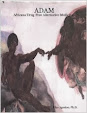
My book, ADAM: Africana Drug-Free Alternative Medicine, has been recognized by the National Natural Medicine Development Agency for many months as the ‘Book of the Month’ in their digital library. I am pleased to say that the book has the solution to the health of President Yar’Adua. The solution would cost him absolutely nothing and also save our country from the contempt of the international com munity. Poor Nigerians will also benefit from my discoveries because my effective prescriptions cost absolutely nothing because they are based on drug-free and herb-free methods of healing!


They said that the man complained of chest pain and doctors diagnosed it as pericarditis with symptoms of cough and catarrh. None of our medical scientists in Nigeria and abroad is able to prescribe anything for the poor comrade and so we are enduring the shame of having our number one citizen being detained by common medical doctors who are dictating when he would be allowed to come back as our Servant Leader. What a shame!


We are not told details of what the illness is and so we can only speculate. It is important that we know exactly what the president is suffering from to avoid unnecessary panic whenever he is hospitalized. Nigerians have demonstrated their melodramatic Nollywood traits by organizing prayer carnivals or jockeying for his office rather offer a scientific response to what is a scientific problem in the age of the knowledge economy.


If it is common catarrh and chest pain, then we should be told so because there is nothing secret about the common cold. Millions of Nigerians catch it every year without having to rush to hospital. Many would just buy antibiotics (unnecessarily) from chemists and treat themselves but many more will just endure it and let it pass. What is shameful is that our number one citizen would go abroad for treatment when there could be effective remedies in the country. To put it bluntly, the president should save us the embarrassment of going abroad to be treated for the common cold because there is no known cure for the infection.


For the chest pain, the president should immediately check his posture. I read in one of the papers that he is sitting and watching football as he recovers in Saudi Arabia. Bad situation, if you ask me! Sitting on a couch or being propped up in bed to watch hours of television is exactly the kind of posture that would trigger chest pain. Snap out of it and do some gentle stretching for at least 30 minutes daily. As a powerful man, I am almost certain that the kind of couch he sits on at home and in the office is very soft. Wrong type if you have to sit there for hours and hours on end. Always sit with your back resting on a firm backrest and always sleep on your back for quick recovery from the chest pain without any medication!


If it was allergy to hay fever, the president should note that he may be catching it from his air conditioners. As a big man, he probably sleeps in an air-conditioned bedroom, drives everywhere in air-conditioned vehicles, works in air-conditioned offices and rarely gets to breathe fresh air. This could lead to something called air-conditioner fever which is caused by pores that the cold air blows into the enclosed environment. The air indoors is twice as polluted as the air outside. So for prevention, the president must make sure that he opens the windows in his bedroom, his office and his vehicles at least once a day. He should use fans more and air-conditioners less.


If the allergy is about to attack him by blocking his nose, he must not blow his nose. He should sniff it in and spit out to prevent the imminent attack from being full blown. If the cold is a full blown attack, all the president needed was to go off food, get plenty of bed rest, lots of fresh air, lots of fresh fruits and lots of water and he would be better within twenty-four hours. My 2006 book, ADAM: Africana Drug-Free Alternative Medicine ISBN: 978-1-4116-6915- 4 (www.lulu.com) has a chapter on how to prevent the common cold and the president may benefit from reading the book for this and other ailments that could be treated or prevented without any medication.


It is an easy to read book about bio-feedbacks and how to listen to the body in order to learn how to prevent or how to heal the body without relying on drugs or herbs for the cases of ill health covered. In it I reveal to any person who suffers from many chronic illnesses, the secrets of how to listen to the body and to understand what the body is saying and how to respond to the feedback from the body in order to stay more healthy.

ADAM: Africana Drug-Free Alternative Medicine is good news to the poor people of the world who lack adequate access to modern medical technologies because the methods revealed in the book are not only drug-free, they are also free of charge because you do not need to buy anything other than the book to help you follow the instructions and take better control of your health.


ADAM: Africana Drug-Free Alternative Medicine is a humorous step-by-step guide to help individuals rediscover the ancient wisdom that must have been with us from the beginning of time when there were no doctors or drugs and yet people lived for centuries because they could tap into knowledge systems that the modern world may have lost as we chase after pills and disregard anything that could not be sold as a commodity.


I wrote ADAM: Africana Drug-Free Alternative Medicine to help my family, friends and colleagues to learn from my personal discoveries but they soon started urging me to publish it and share it with the world generally. My aim is to get the book to readers as quickly as possible without making the book too expensive, hence I used on-demand printing to publish it.


I propose to share the discoveries in the book with the Nigerian public as part of the struggle for better health for all but especially for the poor who do not have the kind of money that made it possible for our Comrade President to travel abroad for such a small thing. If the government would approve a research grant for the clinical trials, I would design an experiment in which thousands try my proven ADAM principles while a control group tries the conventional methods and we will compare to see which is more effective.


The newly founded national institute for alternative medicine is a step in the right direction and I would like to collaborate with the institute in the clinical trials if funded. Apart from the flu and the common cold, my book also has discoveries on how to prevent migraine without drugs, how to heal backache without drugs or surgery, how to cure bellyache without drugs, and many more tips that could benefit both the rich and the poor.


It is sad to read that the president keeps being rushed abroad where the authoritarian doctors keep holding him hostage in order to claim a bigger payment in defiance of our national interest to have our Servant Leader back! When will the human rights lawyers bring a law suit against the foreign hospitals for kidnapping our Comrade President? I wish the president quick recovery but I also hope that his handlers are alert to issues of national interest in how his health is being handled. I hope that the issues will be carefully analyzed to identify lessons for the country and for the president personally.


Dr Agozino is Professor of Sociology and Director of Africana Studies Program, Virginia Tech, Blacksburg. agozino@vt.edu