
Hi Dad,
I am participating in a program with my school called success for life where they take us to 5 different buisnesses over the course of 5 weeks and have recently completed the first day of it. They asked us to do some homework for the next session in a week's time and one of the assignments is to ask a successful adult the folowing questions:
What does success mean to you?
What three traits/skills are needed to be successful?
Could you arnswer those two questions for me please?
Dear Sons,
Thank you for asking me these important questions and for thinking of me as a successful adult. I am so proud to know that you think of me this way and I can tell you that you and your brothers and sisters will be even more successful than me because you are standing on the shoulders of successful giants, so you will see farther than your father can. Thanks sons.
SUCCESS:
Look at the spelling first. We cannot spell it without U. In fact, we cannot spell you without U. So the most important definition of success is that it means that YOU achieve the goals that YOU set for yourself, provided that the goal is good and not harmful. In short, success means good goal attainment.
I will add that a successful goal attainment implies that the goal is a positive one and not a negative one. For instance, Voldermot succeeded in killing the parents of Harry Porter but You-know-who cannot be said to be successful even as a wizard because little Harry could whip his ass with good magic. Harry is a hero but Voldermot is a villain.
Another villain was Hitler who killed millions of people but who remains a failure as far as political leadership is concerned. Nelson Mandela is a hero even though he lost more than 27 years of his adult life in prison for asking that everyone should be treated with respect and dignity. Mandela is a success because he set himself a progressive goal while Hitler is a failure because he set himself an evil goal.
In business, some companies set themselves the goal of making huge profits and refuse to treat their workers right or to take care of the environment. Such unethical businesses could make lots of money on the short run but before long, their dodgy business practices will catch up with them and their company would collapse. For example, in the US, there was a company called Enron that was very successful in making profits for the share-holders by using false accounting to inflate the value of the company stocks. They also tricked their workers to invest all their retirement savings in the company stocks to boost the value. At the same time, the directors of the company were selling their own shares and cashing out huge bonuses just in time before the shares of the company collapsed. The company was also an energy company that did not care about renewable energy to help save the earth from climate change. In the end, the directors of the company were sentenced to long terms in prison to show that they failed as business leaders.
A good example of successful business leaders would include Bill Gates and Younis, the Bangladeshi Nobel Peace Winner. They both made a lot of money but use the money to pursue some good for the rest of humanity. For instance, the Bill Gates Foundation gives millions of dollars every year in grants to researchers to help to find cures for diseases in poor countries. Younis set up a micro-credit bank to give small loans to poor women and men in Bangladesh so that they could set up their own small businesses.
So what does it take to be successful? TEAM: Together Each Achieves More. None of the really successful people ever did it on their own without a team. Even Warren Buffet could claim that he did it all by himself but he had workers working for him and he had a wife who supported him and children who also gave him support. Anyone who claims to be a self-made person is not telling the truth because everyone is the product of elaborate team work.
Of course, some people do not know this secret of success and continue to try to do everything by themselves. They may have heard that what it takes to be successful is lots of hard work. I disagree. What it takes to succeed is smart work and team work is one of the smartest ways to work and achieve success.
You must remember when I used to coach your soccer team in Indiana. I taught you to touch the ball once to control it and the next touch would be to pass it to a team-mate in a better position to score. That way, we scored lots of goals but a few of the kids did not understand the method and tried to be the hero who beat everybody to score but they almost always lost the ball. You still see this error even in premier league except in clubs like Man U, Chelsea and Arsenal where the two-touch maximum strategy in team play makes for maximum success. Liverpool still has good players like Steven Gerald who believes that he alone can win matches for the team and so they are crap much of the time.
The same principle applies to academic success. Work smart and not hard. Your team for academic success includes your parents and teachers as your coaches, your brothers, sisters and classmates as your team mates. You share the home chores, you give each other support and advice, you want to see everyone succeed and together each achieves more.
Apart from teamwork, another key to success is time management. You have to spend your time wisely because a stitch in time saves nine. If you spend too much time watching television, hanging out on the street corner, drinking and chasing the opposite sex or doing drugs, fighting or simply playing computer games, then you will have less time to spend on your studies or on your business planning. The same way that your school has a time-table showing what activities must be engaged in every minute of the day, that is the way successful leaders parcel out their time showing how many hours they would spend studying English Language, then mathematics, then reading for pleasure, then cleaning the house, then speaking with friends, then playing a game with the family and so on. Plan to read for at least 45 minutes everyday and plan to write something every week to improve your skills and your critical thinking skills.
Also connected to time management is effective planning. In business, it is always important to have a business plan. The same goes in academic success - you need a research proposal before you start your research project; plan to go to university and study for a degree, plan to join a political party and participate in the formulation of policies for your country, volunteer in your community to help the less fortunate, learn useful skills, play in a team sport to learn team-building and team work skills, join a debating society to sharpen your critical thinking skills, start a business of your own. Learn how to save money for your business plans and investment.
Finally, some key skills necessary for success in any field is to learn to take good care of yourself. Always start the day by doing a poo, then stretch and exercise for 30 minutes, then breakfast and poo again (usually a bigger poo the second time) then brush your teeth and shower without soap and use soap only once in a while, have a light lunch or fruits snacks for lunch and drink lots of water (no soda and rarely juice) and do not eat a heavy dinner just before bedtime, and brush your teeth before bed. A heavy lunch will slow you down during the day and make you sleepy. Always plan to get at least 8 hours of sleep every night - early to bed and early to rise makes a man healthy, wealthy and wise!
Finally, sons, remember that the most successful people in the world are not always the richest people. For instance, who is the most successful Englishman of all time? William Shakespeare. Who is the most successful German of all time? Karl Marx. Who is the most successful Jew of all time? Albert Einstein. Who is the most successful Russian of all time? Lenin. Who is the most successful Ghanaian? Nkrumah. Who is the most successful Indian? Gandhi. Who is the most successful American? Martin Luther King Junior. Who is the most successful African? Mandela. None of them was the richest person in their era but they made important contributions to knowledge and to humanity and so thousands of years to come, people will still be reading about them when we may have forgotten about who was the richest person at any time.
So the best key to success is to aim to offer intellectual and moral leadership to make the world better in all your endeavours and in all the teams you build or work in.
Lots of love sons. I know you will be among the most successful men of your generation.
Dad
Saturday, January 23, 2010


Monday, December 28, 2009
Dennis Brutus 1924-2009
By Biko Agozino
When I first met Dennis Brutus on the campus of the University of Calabar in the 1980s during the African Literature Conference Series that Earnest Emenyonu organized, he looked so tall and so larger than life that when I met him again in Pittsburg in 2002, I could not believe that it was the same person. We shared an Azania Heritage Foundation platform discussing reparations for slavery and for apartheid crimes. He briefed us on the litigation against companies that benefited from apartheid gold and I expressed the view that litigation might benefit lawyers who corner 40% of the payout more than the litigants and recommended that pressure for legislation, negotiation and arbitration might produce more substantial 'reparative justice' in the long run for the victimized.
Later, Dennis agreed to grant me a videotaped interview in his office at the University of Pittsburgh during which he taught me a few lessons. I had read the dolphin poem in the Stubborn Hope collection during high school and believed that the reference to a father was metaphorical, not knowing that it was a poem to his own children about freedom in the open seas with all the risks being preferable to the security of the swimming pool from the point of view of the dolphin; his children had asked him for a dolphin poem, he explained. But when I interviewed him in Pittsburgh,
feeling like one of the children for whom he wrote it, he did not pretend, just an honest reality check.
I interviewed him about his anti-apartheid activities and he explained something that had been bothering me for a long time, given my own name: why did Steve Biko not join the ANC? The explanation of Brutus was that the ANC would not admit white people and colored people back then, Brutus himself had to join the colored people's congress, for instance, and progressive whites had no choice but to join the CP. Biko was of the view that anyone who was for the struggle should be allowed full membership. This explanation reminded me of that scene from Cry Freedom where Denzel Washington as Biko responded to those who queried what a white man, Donald Woods, was doing in the Township and Biko asked them to witness the education of a white liberal, an education that probably helped to save the life of Woods when the regime went after him. It took a long time before the ANC came round to the correct position of Biko in terms of inclusiveness but it may have been a sign of the times with apartheid decreeing separateness in organizations. I checked this fact on the ANC website after several senior scholars expressed surprise at the information. Brutus was right because the official history of ANC states that membership of the party was thrown open to 'non-Africans', meaning non-Blacks, only after the 1969 Consultative Conference in Morogoro, Tanzania, as a measure to consolidate the mulit-racial ideals of the party as expressed in the Freedom Charter declaration of 1959.
Brutus will never die! I told him as much at the end of my interview with him. What was he still doing in Pittsburgh when he could be exercising greater moral and intellectual leadership in South Africa? He expressed concern about the violence in the country but I reassured him that no one would dare touch him if they knew what he represented. He must have been planning the relocation and surely enough, he achieved a lot more in those final years than he could have achieved in exile, at least judging by all those honourary doctorates that our Baba Dolphin gathered in the wild compared to the sterile chlorinated pool that he resisted being deported from when the wild sea was still ruled by apartheid sharks!
When I first met Dennis Brutus on the campus of the University of Calabar in the 1980s during the African Literature Conference Series that Earnest Emenyonu organized, he looked so tall and so larger than life that when I met him again in Pittsburg in 2002, I could not believe that it was the same person. We shared an Azania Heritage Foundation platform discussing reparations for slavery and for apartheid crimes. He briefed us on the litigation against companies that benefited from apartheid gold and I expressed the view that litigation might benefit lawyers who corner 40% of the payout more than the litigants and recommended that pressure for legislation, negotiation and arbitration might produce more substantial 'reparative justice' in the long run for the victimized.
Later, Dennis agreed to grant me a videotaped interview in his office at the University of Pittsburgh during which he taught me a few lessons. I had read the dolphin poem in the Stubborn Hope collection during high school and believed that the reference to a father was metaphorical, not knowing that it was a poem to his own children about freedom in the open seas with all the risks being preferable to the security of the swimming pool from the point of view of the dolphin; his children had asked him for a dolphin poem, he explained. But when I interviewed him in Pittsburgh,
feeling like one of the children for whom he wrote it, he did not pretend, just an honest reality check.
I interviewed him about his anti-apartheid activities and he explained something that had been bothering me for a long time, given my own name: why did Steve Biko not join the ANC? The explanation of Brutus was that the ANC would not admit white people and colored people back then, Brutus himself had to join the colored people's congress, for instance, and progressive whites had no choice but to join the CP. Biko was of the view that anyone who was for the struggle should be allowed full membership. This explanation reminded me of that scene from Cry Freedom where Denzel Washington as Biko responded to those who queried what a white man, Donald Woods, was doing in the Township and Biko asked them to witness the education of a white liberal, an education that probably helped to save the life of Woods when the regime went after him. It took a long time before the ANC came round to the correct position of Biko in terms of inclusiveness but it may have been a sign of the times with apartheid decreeing separateness in organizations. I checked this fact on the ANC website after several senior scholars expressed surprise at the information. Brutus was right because the official history of ANC states that membership of the party was thrown open to 'non-Africans', meaning non-Blacks, only after the 1969 Consultative Conference in Morogoro, Tanzania, as a measure to consolidate the mulit-racial ideals of the party as expressed in the Freedom Charter declaration of 1959.
Brutus will never die! I told him as much at the end of my interview with him. What was he still doing in Pittsburgh when he could be exercising greater moral and intellectual leadership in South Africa? He expressed concern about the violence in the country but I reassured him that no one would dare touch him if they knew what he represented. He must have been planning the relocation and surely enough, he achieved a lot more in those final years than he could have achieved in exile, at least judging by all those honourary doctorates that our Baba Dolphin gathered in the wild compared to the sterile chlorinated pool that he resisted being deported from when the wild sea was still ruled by apartheid sharks!
Thursday, December 24, 2009
Healing The President
Healing Help for President Yar’Adua
By Biko Agozino
My book, ADAM: Africana Drug-Free Alternative Medicine, has been recognized by the National Natural Medicine Development Agency for many months as the ‘Book of the Month’ in their digital library. I am pleased to say that the book has the solution to the health of President Yar’Adua. The solution would cost him absolutely nothing and also save our country from the contempt of the international com munity. Poor Nigerians will also benefit from my discoveries because my effective prescriptions cost absolutely nothing because they are based on drug-free and herb-free methods of healing!
They said that the man complained of chest pain and doctors diagnosed it as pericarditis with symptoms of cough and catarrh. None of our medical scientists in Nigeria and abroad is able to prescribe anything for the poor comrade and so we are enduring the shame of having our number one citizen being detained by common medical doctors who are dictating when he would be allowed to come back as our Servant Leader. What a shame!
We are not told details of what the illness is and so we can only speculate. It is important that we know exactly what the president is suffering from to avoid unnecessary panic whenever he is hospitalized. Nigerians have demonstrated their melodramatic Nollywood traits by organizing prayer carnivals or jockeying for his office rather offer a scientific response to what is a scientific problem in the age of the knowledge economy.
If it is common catarrh and chest pain, then we should be told so because there is nothing secret about the common cold. Millions of Nigerians catch it every year without having to rush to hospital. Many would just buy antibiotics (unnecessarily) from chemists and treat themselves but many more will just endure it and let it pass. What is shameful is that our number one citizen would go abroad for treatment when there could be effective remedies in the country. To put it bluntly, the president should save us the embarrassment of going abroad to be treated for the common cold because there is no known cure for the infection.
For the chest pain, the president should immediately check his posture. I read in one of the papers that he is sitting and watching football as he recovers in Saudi Arabia. Bad situation, if you ask me! Sitting on a couch or being propped up in bed to watch hours of television is exactly the kind of posture that would trigger chest pain. Snap out of it and do some gentle stretching for at least 30 minutes daily. As a powerful man, I am almost certain that the kind of couch he sits on at home and in the office is very soft. Wrong type if you have to sit there for hours and hours on end. Always sit with your back resting on a firm backrest and always sleep on your back for quick recovery from the chest pain without any medication!
If it was allergy to hay fever, the president should note that he may be catching it from his air conditioners. As a big man, he probably sleeps in an air-conditioned bedroom, drives everywhere in air-conditioned vehicles, works in air-conditioned offices and rarely gets to breathe fresh air. This could lead to something called air-conditioner fever which is caused by pores that the cold air blows into the enclosed environment. The air indoors is twice as polluted as the air outside. So for prevention, the president must make sure that he opens the windows in his bedroom, his office and his vehicles at least once a day. He should use fans more and air-conditioners less.
If the allergy is about to attack him by blocking his nose, he must not blow his nose. He should sniff it in and spit out to prevent the imminent attack from being full blown. If the cold is a full blown attack, all the president needed was to go off food, get plenty of bed rest, lots of fresh air, lots of fresh fruits and lots of water and he would be better within twenty-four hours. My 2006 book, ADAM: Africana Drug-Free Alternative Medicine ISBN: 978-1-4116-6915- 4 (www.lulu.com) has a chapter on how to prevent the common cold and the president may benefit from reading the book for this and other ailments that could be treated or prevented without any medication.
It is an easy to read book about bio-feedbacks and how to listen to the body in order to learn how to prevent or how to heal the body without relying on drugs or herbs for the cases of ill health covered. In it I reveal to any person who suffers from many chronic illnesses, the secrets of how to listen to the body and to understand what the body is saying and how to respond to the feedback from the body in order to stay more healthy.
ADAM: Africana Drug-Free Alternative Medicine is good news to the poor people of the world who lack adequate access to modern medical technologies because the methods revealed in the book are not only drug-free, they are also free of charge because you do not need to buy anything other than the book to help you follow the instructions and take better control of your health.
ADAM: Africana Drug-Free Alternative Medicine is a humorous step-by-step guide to help individuals rediscover the ancient wisdom that must have been with us from the beginning of time when there were no doctors or drugs and yet people lived for centuries because they could tap into knowledge systems that the modern world may have lost as we chase after pills and disregard anything that could not be sold as a commodity.
I wrote ADAM: Africana Drug-Free Alternative Medicine to help my family, friends and colleagues to learn from my personal discoveries but they soon started urging me to publish it and share it with the world generally. My aim is to get the book to readers as quickly as possible without making the book too expensive, hence I used on-demand printing to publish it.
I propose to share the discoveries in the book with the Nigerian public as part of the struggle for better health for all but especially for the poor who do not have the kind of money that made it possible for our Comrade President to travel abroad for such a small thing. If the government would approve a research grant for the clinical trials, I would design an experiment in which thousands try my proven ADAM principles while a control group tries the conventional methods and we will compare to see which is more effective.
The newly founded national institute for alternative medicine is a step in the right direction and I would like to collaborate with the institute in the clinical trials if funded. Apart from the flu and the common cold, my book also has discoveries on how to prevent migraine without drugs, how to heal backache without drugs or surgery, how to cure bellyache without drugs, and many more tips that could benefit both the rich and the poor.
It is sad to read that the president keeps being rushed abroad where the authoritarian doctors keep holding him hostage in order to claim a bigger payment in defiance of our national interest to have our Servant Leader back! When will the human rights lawyers bring a law suit against the foreign hospitals for kidnapping our Comrade President? I wish the president quick recovery but I also hope that his handlers are alert to issues of national interest in how his health is being handled. I hope that the issues will be carefully analyzed to identify lessons for the country and for the president personally.
Dr Agozino is Professor of Sociology and Director of Africana Studies Program, Virginia Tech, Blacksburg. agozino@vt.edu
By Biko Agozino
My book, ADAM: Africana Drug-Free Alternative Medicine, has been recognized by the National Natural Medicine Development Agency for many months as the ‘Book of the Month’ in their digital library. I am pleased to say that the book has the solution to the health of President Yar’Adua. The solution would cost him absolutely nothing and also save our country from the contempt of the international com munity. Poor Nigerians will also benefit from my discoveries because my effective prescriptions cost absolutely nothing because they are based on drug-free and herb-free methods of healing!
They said that the man complained of chest pain and doctors diagnosed it as pericarditis with symptoms of cough and catarrh. None of our medical scientists in Nigeria and abroad is able to prescribe anything for the poor comrade and so we are enduring the shame of having our number one citizen being detained by common medical doctors who are dictating when he would be allowed to come back as our Servant Leader. What a shame!
We are not told details of what the illness is and so we can only speculate. It is important that we know exactly what the president is suffering from to avoid unnecessary panic whenever he is hospitalized. Nigerians have demonstrated their melodramatic Nollywood traits by organizing prayer carnivals or jockeying for his office rather offer a scientific response to what is a scientific problem in the age of the knowledge economy.
If it is common catarrh and chest pain, then we should be told so because there is nothing secret about the common cold. Millions of Nigerians catch it every year without having to rush to hospital. Many would just buy antibiotics (unnecessarily) from chemists and treat themselves but many more will just endure it and let it pass. What is shameful is that our number one citizen would go abroad for treatment when there could be effective remedies in the country. To put it bluntly, the president should save us the embarrassment of going abroad to be treated for the common cold because there is no known cure for the infection.
For the chest pain, the president should immediately check his posture. I read in one of the papers that he is sitting and watching football as he recovers in Saudi Arabia. Bad situation, if you ask me! Sitting on a couch or being propped up in bed to watch hours of television is exactly the kind of posture that would trigger chest pain. Snap out of it and do some gentle stretching for at least 30 minutes daily. As a powerful man, I am almost certain that the kind of couch he sits on at home and in the office is very soft. Wrong type if you have to sit there for hours and hours on end. Always sit with your back resting on a firm backrest and always sleep on your back for quick recovery from the chest pain without any medication!
If it was allergy to hay fever, the president should note that he may be catching it from his air conditioners. As a big man, he probably sleeps in an air-conditioned bedroom, drives everywhere in air-conditioned vehicles, works in air-conditioned offices and rarely gets to breathe fresh air. This could lead to something called air-conditioner fever which is caused by pores that the cold air blows into the enclosed environment. The air indoors is twice as polluted as the air outside. So for prevention, the president must make sure that he opens the windows in his bedroom, his office and his vehicles at least once a day. He should use fans more and air-conditioners less.
If the allergy is about to attack him by blocking his nose, he must not blow his nose. He should sniff it in and spit out to prevent the imminent attack from being full blown. If the cold is a full blown attack, all the president needed was to go off food, get plenty of bed rest, lots of fresh air, lots of fresh fruits and lots of water and he would be better within twenty-four hours. My 2006 book, ADAM: Africana Drug-Free Alternative Medicine ISBN: 978-1-4116-6915- 4 (www.lulu.com) has a chapter on how to prevent the common cold and the president may benefit from reading the book for this and other ailments that could be treated or prevented without any medication.
It is an easy to read book about bio-feedbacks and how to listen to the body in order to learn how to prevent or how to heal the body without relying on drugs or herbs for the cases of ill health covered. In it I reveal to any person who suffers from many chronic illnesses, the secrets of how to listen to the body and to understand what the body is saying and how to respond to the feedback from the body in order to stay more healthy.
ADAM: Africana Drug-Free Alternative Medicine is good news to the poor people of the world who lack adequate access to modern medical technologies because the methods revealed in the book are not only drug-free, they are also free of charge because you do not need to buy anything other than the book to help you follow the instructions and take better control of your health.
ADAM: Africana Drug-Free Alternative Medicine is a humorous step-by-step guide to help individuals rediscover the ancient wisdom that must have been with us from the beginning of time when there were no doctors or drugs and yet people lived for centuries because they could tap into knowledge systems that the modern world may have lost as we chase after pills and disregard anything that could not be sold as a commodity.
I wrote ADAM: Africana Drug-Free Alternative Medicine to help my family, friends and colleagues to learn from my personal discoveries but they soon started urging me to publish it and share it with the world generally. My aim is to get the book to readers as quickly as possible without making the book too expensive, hence I used on-demand printing to publish it.
I propose to share the discoveries in the book with the Nigerian public as part of the struggle for better health for all but especially for the poor who do not have the kind of money that made it possible for our Comrade President to travel abroad for such a small thing. If the government would approve a research grant for the clinical trials, I would design an experiment in which thousands try my proven ADAM principles while a control group tries the conventional methods and we will compare to see which is more effective.
The newly founded national institute for alternative medicine is a step in the right direction and I would like to collaborate with the institute in the clinical trials if funded. Apart from the flu and the common cold, my book also has discoveries on how to prevent migraine without drugs, how to heal backache without drugs or surgery, how to cure bellyache without drugs, and many more tips that could benefit both the rich and the poor.
It is sad to read that the president keeps being rushed abroad where the authoritarian doctors keep holding him hostage in order to claim a bigger payment in defiance of our national interest to have our Servant Leader back! When will the human rights lawyers bring a law suit against the foreign hospitals for kidnapping our Comrade President? I wish the president quick recovery but I also hope that his handlers are alert to issues of national interest in how his health is being handled. I hope that the issues will be carefully analyzed to identify lessons for the country and for the president personally.
Dr Agozino is Professor of Sociology and Director of Africana Studies Program, Virginia Tech, Blacksburg. agozino@vt.edu
Monday, July 20, 2009
My Mandela Day Activity
Mandela Day Reflections on Ekwe-Ekwe’s Discourses
By Biko Agozino
I wrote this on July 18 in response to the call by Baba Mandela that people all over the world should spend 67 minutes to do community work in honour of his 91st birthday. Bayeete aaaah Madiba! I must confess that it took me more than 67 minutes to read Ekwe-Ekwe’s essay and then write this review but that is a good omen that Saint Mandela will be with us much longer and forever continue to inspire the struggle for African national unity from Cape to Cairo. Happy Birthday Baba!
I was a student of Herbert Ekwe-Ekwe at the University of Calabar in the early 1980s when I took his introductory political science class as an elective. I credit him as one of those who helped to sharpen my critical thinking. I would have liked to take more classes with him but he resigned to join the editorial board of a national newspaper and an essay of his in the memorial to Bala Mohammed, published by the Kano State Government, suggests that he also associated in some capacity with the Peoples Redemption Party (PRP) led by Mallam Aminu Kano; with S.G. Ikoku as National Vice Chairman and Chinua Achebe as the National Secretary.
Other progressive intellectuals in that party formation included the great Eskor Toyo who was probably my greatest informal teacher at Calabar University; Bala Mohammed who was lynched (supposedly because of his progressive radio broadcasts in Hausa language, the tapes of the broadcasts were burnt) by a mob that the police allegedly described as a ‘cooperative mob’ , according to Yusuf Bala Usman, another radical scholar who served as Secretary to the PRP Kaduna State Government of Balarabe Musa before the governor was impeached.
Something must have happened in that political party to traumatize these progressive scholars because they emerged from the PRP as if from a house on fire and mostly changed course ideologically in puzzling ways apart from Eskor Toyo who remained consistent. Achebe came out from the party and published The Trouble with Nigeria in which he launched into a bewildering critique of Nnamdi Azikiwe, Zik of Africa, the first president of the country, whom he dismissed as a quitter who never saw anything through. That polemical booklet interpreted the trouble with Nigeria mainly as the trouble of discriminating against the Igbo while promoting mediocrity in national leadership.
S.G. Ikoku emerged from PRP and bolted in the opposite ideological direction by joining the National Party of Nigeria, the then federal government ruling bourgeois party. Ekwe-Ekwe himself emerged from that experience with a consuming passion to campaign against the genocide that the Igbo suffered from 1966 to 1970 before and during the Nigerian-Biafran war. Yusuf Bala Usman went back to his teaching at Ahmadu Bello University and was soon fired by the military regime that toppled the second republic but he went to court and won his job back. However, his radical historiography began concentrating on a weird theory of how the oil in the Niger Delta was the product of the sedimentation of centuries of flora and fauna from the northern region and so the oil was actually derived from the north and not from the south. I look forward to reading an internal critique of what happened in that party (PRP) to produce these ideological reactions from eminent progressive intellectuals.
An indirect explanation came in the form of ‘Brazil discourses – Africa, the state, genocide and the future’, the text of ten lectures on Africa delivered by Herbert Ekwe-Ekwe between 13 June and 10 July, 2009, at several Brazilian Universities. Opening with Ekwe-Ekwe’s characteristic incisive thinking, the long essay asserts that, ‘Arms, arming, armies and armed conflicts as well as a deleterious political economy characterize the tragedy of contemporary Africa.’ He goes on to lament that 15 million out of 40 million people killed in wars since the end of the Second World War in 1945 were killed in Africa and added; ‘- notably the 1966-1970 Igbo genocide executed by the Nigerian state and its allies (was) the foundational and most gruesome genocide in Africa to date where 3.1 million Igbo people were murdered…’
Did someone try to raise this issue within the PRP and demand that the party take a position towards advocating reparations (or demanding prosecutions, Ekwe-Ekwe’s preference) but was shouted down and ran out of town by the membership of the northern based progressive party? Ekwe-Ekwe’s Brazil lectures did not raise this question but he may have provided clues when he concluded by calling on his Brazilian audience to campaign against the sale of arms to Africa by the Brazilian military industrial complex because such arms would end up being used to continue the killing of Africans by what he calls repeatedly the genocide states in Africa.
Ekwe-Ekwe bemoans the fact that Africa has the most number of child soldiers in the world today. Africa also transfers more money to the international community than all the foreign aid and foreign direct investments coming into Africa while African émigrés send back more remittance than all the foreign aid. For instance, since 1981, Africa has transferred as debt servicing, ‘US$400 billion to the West – a sum which is in fact four times the size of the original US$100 billion principal of the continent’s “debt” as it stood in 1980 and in excess of the present value of US$350 billion.’ He blames this dilemma mainly on militarization which continues to enjoy the lion’s share (25%) of the GNP of African states at the expense of health (2.1%), education (2.4%), housing, agriculture and infrastructures.
He links the wars in Africa with the struggle to control and exploit the rich natural resources in Africa in the interest of the corrupt local elites and their foreign backers and he indicts British and American governments with being the major gun-runners in Africa because Africa still remains largely incapable of manufacturing small arms. He dismisses the dichotomy between legal arms from the West and illegal arms from Eastern Europe and observes that the consequences are the same since all the arms, legal and illegal, are used to kill Africans en-masse while Africa remains rich in natural and human resources with abundant arable land for agriculture.
He also dismissed the idea that Africa is full of failed states especially in the region that western media analysts like to refer to as Sub-Saharan Africa as if the inhabitants are sub-human. He dismissed such terminology by wondering if the other regions of the world should be renamed sub-this and sub-that in reference to their proximity to major geographical landmarks. According to him, the trouble with Africa is that all the states constructed by European colonizers ignored natural ethnic boundaries and lumped nationalities together under one country without consulting the people. What is to be done is to disarm the neo-colonial states, dissolve them and then reconstitute them along the lines that the people choose by themselves according to their cultural traditions. He concluded by calling on President Obama and African Brazilians to campaign for Africa to be designated an arms-free zone.
Unfortunately, it is true that some of Ekwe-Ekwe’s lines of reasoning have been used by Eurocentric scholars to dismiss African nationalism as inauthentic nationalism on the excuse that African nation states are actually multi-national states because they have competing ethnicities and competing loyalties. The irony is that all modern nation-states are indeed multicultural or multi-ethnic in form except for a few tragic cases in which the ruling groups attempted ethnic cleansing for the purpose of attaining the unattainable goal of homogeneity in a modern national population. The tragedy is that all the states that attempted to constitute a homogeneous population ended up almost completely destroyed by the forces of differentiation.
A few examples will suffice. Can you think of any country today that has only one language and therefore only one ethnicity or that attempted to construct such a fiction? That is right, Germany comes to mind and everyone knows that the country was almost ground into the dust of history as a result of that xenophobia. Japan tried it too but pulled back from the edge of the abyss. But closer home in Africa, the examples of states with only a single language include, surprise-surprise, Rwanda, Somalia, and Bantustans! Do I need to say what happened to them? In Nigeria, the Niger Delta activists are actually killing more Niger Delta people than anyone else in their battle for homogeneous control over oil company crumbs.
On the contrary, the more multicultural a country is today, the more vibrant the more promising it tends to be. For instance, while speaking in the dynamic multicultural country of Brazil, Ekwe-Ekwe never called for the dissolution of the country and its reconstitution along the lines of Amazonian tribes, African Brazilians and European descended people as separate nations. Instead, he simply called on them to campaign against arms sales by their country to Africa but without advocating for those of them, African Brazilians in particular, who still suffer racial discrimination despite the prosperity of their country, who wished to return to a united Africa should be encouraged to campaign for African Unity to enable them to enjoy dual citizenship like the Euro-Brazilians.
It is worth noting that OXFAM and United Nation agencies that Ekwe-Ekwe critiqued for their limited humanitarianism are already campaigning to bring about an Arms Trade Treaty (ATT) that would regulate the ‘responsible’ transfer of arms. The call for Africa to be declared an arms-free zone appears impractical given that the arms trade is largely legal as Ekwe-Ekwe admits and that even if arms are banned completely, the weapons used by perpetrators of genocide need not be sophisticated weapons but often crude clubs and machetes as the Rwanda genocide reminds us. It is up to us Africans to refuse to buy weapons of mass destruction and concentrate our resources on socio-economic development.
Ekwe-Ekwe dismissed the call for African Unity under the suspicion that it would give rise to a genocidal state but I believe that he is mistaken. A United Africa would be the antidote to genocide in Africa because no section of the Peoples Republic of Africa United Democratically (PRAUD) would wake up one morning, slap their buttocks (as Ekwe-Ekwe used to say in class in Calabar) and decide to commit genocide against their neighbours without contending with the might of a united Africa to step in and stop it or deter it without waiting for permission from the local state. The savings we would make from avoiding the multiplications of defense expenditures would go to infrastructural development, education, health and industrialization for the prosperity of our people. Our people would be free to move to any part of the Peoples Republic of Africa and settle without undue fear just as the citizens of all powerful countries in the world today.
By Biko Agozino
I wrote this on July 18 in response to the call by Baba Mandela that people all over the world should spend 67 minutes to do community work in honour of his 91st birthday. Bayeete aaaah Madiba! I must confess that it took me more than 67 minutes to read Ekwe-Ekwe’s essay and then write this review but that is a good omen that Saint Mandela will be with us much longer and forever continue to inspire the struggle for African national unity from Cape to Cairo. Happy Birthday Baba!
I was a student of Herbert Ekwe-Ekwe at the University of Calabar in the early 1980s when I took his introductory political science class as an elective. I credit him as one of those who helped to sharpen my critical thinking. I would have liked to take more classes with him but he resigned to join the editorial board of a national newspaper and an essay of his in the memorial to Bala Mohammed, published by the Kano State Government, suggests that he also associated in some capacity with the Peoples Redemption Party (PRP) led by Mallam Aminu Kano; with S.G. Ikoku as National Vice Chairman and Chinua Achebe as the National Secretary.
Other progressive intellectuals in that party formation included the great Eskor Toyo who was probably my greatest informal teacher at Calabar University; Bala Mohammed who was lynched (supposedly because of his progressive radio broadcasts in Hausa language, the tapes of the broadcasts were burnt) by a mob that the police allegedly described as a ‘cooperative mob’ , according to Yusuf Bala Usman, another radical scholar who served as Secretary to the PRP Kaduna State Government of Balarabe Musa before the governor was impeached.
Something must have happened in that political party to traumatize these progressive scholars because they emerged from the PRP as if from a house on fire and mostly changed course ideologically in puzzling ways apart from Eskor Toyo who remained consistent. Achebe came out from the party and published The Trouble with Nigeria in which he launched into a bewildering critique of Nnamdi Azikiwe, Zik of Africa, the first president of the country, whom he dismissed as a quitter who never saw anything through. That polemical booklet interpreted the trouble with Nigeria mainly as the trouble of discriminating against the Igbo while promoting mediocrity in national leadership.
S.G. Ikoku emerged from PRP and bolted in the opposite ideological direction by joining the National Party of Nigeria, the then federal government ruling bourgeois party. Ekwe-Ekwe himself emerged from that experience with a consuming passion to campaign against the genocide that the Igbo suffered from 1966 to 1970 before and during the Nigerian-Biafran war. Yusuf Bala Usman went back to his teaching at Ahmadu Bello University and was soon fired by the military regime that toppled the second republic but he went to court and won his job back. However, his radical historiography began concentrating on a weird theory of how the oil in the Niger Delta was the product of the sedimentation of centuries of flora and fauna from the northern region and so the oil was actually derived from the north and not from the south. I look forward to reading an internal critique of what happened in that party (PRP) to produce these ideological reactions from eminent progressive intellectuals.
An indirect explanation came in the form of ‘Brazil discourses – Africa, the state, genocide and the future’, the text of ten lectures on Africa delivered by Herbert Ekwe-Ekwe between 13 June and 10 July, 2009, at several Brazilian Universities. Opening with Ekwe-Ekwe’s characteristic incisive thinking, the long essay asserts that, ‘Arms, arming, armies and armed conflicts as well as a deleterious political economy characterize the tragedy of contemporary Africa.’ He goes on to lament that 15 million out of 40 million people killed in wars since the end of the Second World War in 1945 were killed in Africa and added; ‘- notably the 1966-1970 Igbo genocide executed by the Nigerian state and its allies (was) the foundational and most gruesome genocide in Africa to date where 3.1 million Igbo people were murdered…’
Did someone try to raise this issue within the PRP and demand that the party take a position towards advocating reparations (or demanding prosecutions, Ekwe-Ekwe’s preference) but was shouted down and ran out of town by the membership of the northern based progressive party? Ekwe-Ekwe’s Brazil lectures did not raise this question but he may have provided clues when he concluded by calling on his Brazilian audience to campaign against the sale of arms to Africa by the Brazilian military industrial complex because such arms would end up being used to continue the killing of Africans by what he calls repeatedly the genocide states in Africa.
Ekwe-Ekwe bemoans the fact that Africa has the most number of child soldiers in the world today. Africa also transfers more money to the international community than all the foreign aid and foreign direct investments coming into Africa while African émigrés send back more remittance than all the foreign aid. For instance, since 1981, Africa has transferred as debt servicing, ‘US$400 billion to the West – a sum which is in fact four times the size of the original US$100 billion principal of the continent’s “debt” as it stood in 1980 and in excess of the present value of US$350 billion.’ He blames this dilemma mainly on militarization which continues to enjoy the lion’s share (25%) of the GNP of African states at the expense of health (2.1%), education (2.4%), housing, agriculture and infrastructures.
He links the wars in Africa with the struggle to control and exploit the rich natural resources in Africa in the interest of the corrupt local elites and their foreign backers and he indicts British and American governments with being the major gun-runners in Africa because Africa still remains largely incapable of manufacturing small arms. He dismisses the dichotomy between legal arms from the West and illegal arms from Eastern Europe and observes that the consequences are the same since all the arms, legal and illegal, are used to kill Africans en-masse while Africa remains rich in natural and human resources with abundant arable land for agriculture.
He also dismissed the idea that Africa is full of failed states especially in the region that western media analysts like to refer to as Sub-Saharan Africa as if the inhabitants are sub-human. He dismissed such terminology by wondering if the other regions of the world should be renamed sub-this and sub-that in reference to their proximity to major geographical landmarks. According to him, the trouble with Africa is that all the states constructed by European colonizers ignored natural ethnic boundaries and lumped nationalities together under one country without consulting the people. What is to be done is to disarm the neo-colonial states, dissolve them and then reconstitute them along the lines that the people choose by themselves according to their cultural traditions. He concluded by calling on President Obama and African Brazilians to campaign for Africa to be designated an arms-free zone.
Unfortunately, it is true that some of Ekwe-Ekwe’s lines of reasoning have been used by Eurocentric scholars to dismiss African nationalism as inauthentic nationalism on the excuse that African nation states are actually multi-national states because they have competing ethnicities and competing loyalties. The irony is that all modern nation-states are indeed multicultural or multi-ethnic in form except for a few tragic cases in which the ruling groups attempted ethnic cleansing for the purpose of attaining the unattainable goal of homogeneity in a modern national population. The tragedy is that all the states that attempted to constitute a homogeneous population ended up almost completely destroyed by the forces of differentiation.
A few examples will suffice. Can you think of any country today that has only one language and therefore only one ethnicity or that attempted to construct such a fiction? That is right, Germany comes to mind and everyone knows that the country was almost ground into the dust of history as a result of that xenophobia. Japan tried it too but pulled back from the edge of the abyss. But closer home in Africa, the examples of states with only a single language include, surprise-surprise, Rwanda, Somalia, and Bantustans! Do I need to say what happened to them? In Nigeria, the Niger Delta activists are actually killing more Niger Delta people than anyone else in their battle for homogeneous control over oil company crumbs.
On the contrary, the more multicultural a country is today, the more vibrant the more promising it tends to be. For instance, while speaking in the dynamic multicultural country of Brazil, Ekwe-Ekwe never called for the dissolution of the country and its reconstitution along the lines of Amazonian tribes, African Brazilians and European descended people as separate nations. Instead, he simply called on them to campaign against arms sales by their country to Africa but without advocating for those of them, African Brazilians in particular, who still suffer racial discrimination despite the prosperity of their country, who wished to return to a united Africa should be encouraged to campaign for African Unity to enable them to enjoy dual citizenship like the Euro-Brazilians.
It is worth noting that OXFAM and United Nation agencies that Ekwe-Ekwe critiqued for their limited humanitarianism are already campaigning to bring about an Arms Trade Treaty (ATT) that would regulate the ‘responsible’ transfer of arms. The call for Africa to be declared an arms-free zone appears impractical given that the arms trade is largely legal as Ekwe-Ekwe admits and that even if arms are banned completely, the weapons used by perpetrators of genocide need not be sophisticated weapons but often crude clubs and machetes as the Rwanda genocide reminds us. It is up to us Africans to refuse to buy weapons of mass destruction and concentrate our resources on socio-economic development.
Ekwe-Ekwe dismissed the call for African Unity under the suspicion that it would give rise to a genocidal state but I believe that he is mistaken. A United Africa would be the antidote to genocide in Africa because no section of the Peoples Republic of Africa United Democratically (PRAUD) would wake up one morning, slap their buttocks (as Ekwe-Ekwe used to say in class in Calabar) and decide to commit genocide against their neighbours without contending with the might of a united Africa to step in and stop it or deter it without waiting for permission from the local state. The savings we would make from avoiding the multiplications of defense expenditures would go to infrastructural development, education, health and industrialization for the prosperity of our people. Our people would be free to move to any part of the Peoples Republic of Africa and settle without undue fear just as the citizens of all powerful countries in the world today.
Thursday, July 16, 2009
G8 $20 BILLION QUESTION
By Biko Agozino
Analysts are slow to give credit to whom honor is due for a key decision of G8 leaders in Italy. I propose that we give the credit to our self-proclaimed ‘Servant Leader’, President Umaru Yar’Adua, who must have used quiet diplomacy to sway the G8 leaders in the desired direction. Some analysts were quick to point out that the $20 billion grants for agriculture agreed by the leaders was a little step in the right direction but complained that it was still too small to solve the huge problem especially in Africa. No one wondered where the idea came from in the first place.
Some wrongly suggest that brother Barak had to bully his G8 colleagues to get them to agree on the initial $15 billion and then he had to bully them some more to raise it to $20 billion shortly afterwards. This is unlikely because the likeable President Obama does not have it in his character to bully even an ant. Moreover, the way the initial sum was agreed only for the amount to be increased shortly was indicative of the fact that the leaders did not plan to make such a decision or they would have agreed on the target amount in advance.
So who done it? I wish to suggest that President Yar’Adua of Nigeria, was the only leader from the developing countries at the G8 meeting with an antecedent of having provided a similar policy in the form of a 200 billion naira credit facility for agriculture in Nigeria this year. As he reluctantly boasted to The Guardian Newspaper in an exclusive interview in April 2009, such a policy had never been implemented in Nigeria before.
It is true that Yar’Adua’s predecessor, Olusegun Obasanjo, had proposed a similar policy but on a smaller scale and no one is certain what became of it. I recall that Dr. Ngozi Okonjo-Iweala, the then finance minister, had announced out of the blue that 50 billion naira would be made available as credit to cassava farmers for commercial export-focused production. Sister Ngozi also promised the innovation that 20% of the fund would be set aside for female farmers and I advised her immediately to make it 50-50 considering that women did the lioness’ share of the work on farms in Nigeria. I hope that both Yar’Adua and the G8 would observe gender equity in the disbursement of the huge investments that they have promised to the agricultural sector.
As I observed in newspaper opinions and interview responses at the time, the policy sounded very similar to proposals that I had announced barely weeks before the Federal Government adopted parts of it. In my preliminary campaign for office of Governor of Enugu state in the 2007 elections, I had proposed that one sure way to turbo-charge the economy of the state was to disburse billions of naira annually as grants, not credits, to the people of the state to invest productively as they saw fit. I pointed out that this was the trend in the industrialized countries and that we need to emulate such a policy if we hope to eradicate poverty from our lands. Of course, I was pleased to hear that the Federal Government was ready to adopt my policy option merely weeks after I made it public but I pointed out the errors in the interpretation of the policy – I called for grants and not credits, I called for such grants to be given to all sectors of the economy and not just to agriculture and surely not for one crop like cassava and definitely not just for export production, not a one-off but a systematic part of the annual budget with at least 10% of the budget to be set aside as grants to the people year after year!
In the past, as I have been arguing without fear of contradiction, the leaders of the developing countries routinely attempted to dictate agricultural policy to the leaders of the developed countries. They usually argued like this – ‘Boss, you know that we do not give a dime as subsidies to our farmers while you give hundreds of billions to yours as subsidies annually. Following the gospel of free market, we insist that you should eliminate farm subsidies to level the playing field.’ Nonsense, thought the leaders of the developed countries. Just because you neglect your farmers is no reason for you to wish to dictate that we neglect ours too.
I have always been convinced that the wiser policy was to support our own farmers and other investors in our economy to the best of our ability and watch our dynamic people take it and run with massive wealth creation despite the inevitable losses in some investments as is always the case. The fear of inflation is raised by critics of such a fiscal policy but my proposal is not for consumption but for production and the government would be able to recover the grants through taxation of the profits of the investors, income taxes on their employees and VAT on purchases.
I have argued repeatedly that this is part of my answer to the Niger Delta question and the question of predatory crimes of kidnapping and armed robbery across the country. If we guarantee that at least 10% of the budgets at the Federal, State, and Local Government levels would be reserved for disbursement to the people as individuals or cooperatives annually, a lot of the youth who are seduced into violent crimes for monetary gains or as protest against underdevelopment could have been empowered to create wealth, jobs and increased happiness in our country. Instead, what we have is brazen kleptocracy in which a few people raid the economy and horde the loot abroad, leaving many people with little option but to work in the devil’s workshop.
My humble hypothesis is that our servant leader, who bravely adopted this policy suggestion as part of his Seven Point Agenda, went to the G8 leaders and looked them straight in the eyes and pontificated: ‘There is an old African saying that if you give a man fura de nunu (fresh yogurt), you feed him for a while but if you give him a cow and teach him how to milk the cow, you feed him for life. For too long, you have acted as humanitarians who provided food aid to the many needy people especially in Africa. We commend you for this generosity without which millions could have died of starvation. But have you considered the option of providing grants to agriculture along the lines of your farm subsidies so that our farmers may be better able to feed our people and even have some to spare for export? Such grants might save you money on food aid and the saving could then be awarded to the poor unemployed youth in your cities to enable them to set up their own enterprises. It is a win-win option for all!’
The G8 leaders must have looked at each other and wondered why they never thought of that before. I hope that brother Barak Obama would take this insight further by announcing an Obama Plan for Africa and inviting a coalition of the willing to contribute to the fund annually to help Africa overcome centuries-old disadvantages. When Africa is empowered to release the immense economic potentials in the continent, the whole world would benefit because Africa would be able to buy more from and sell more to the rest of the world as China and India are beginning to do. I hope that African states will recognize the wisdom of this policy and continue it annually even if the G8 leaders fail to continue such grants. I hope that the Peoples Republic of Africa will soon emerge to continue this policy and end the humiliation that Africans continue to endure in the midst of plenty. Obviously, this extends to all the poor in the world if their governments adopt similar policies of investing 10% of the budgets in the people-initiated research and development or commercial ventures.
Analysts are slow to give credit to whom honor is due for a key decision of G8 leaders in Italy. I propose that we give the credit to our self-proclaimed ‘Servant Leader’, President Umaru Yar’Adua, who must have used quiet diplomacy to sway the G8 leaders in the desired direction. Some analysts were quick to point out that the $20 billion grants for agriculture agreed by the leaders was a little step in the right direction but complained that it was still too small to solve the huge problem especially in Africa. No one wondered where the idea came from in the first place.
Some wrongly suggest that brother Barak had to bully his G8 colleagues to get them to agree on the initial $15 billion and then he had to bully them some more to raise it to $20 billion shortly afterwards. This is unlikely because the likeable President Obama does not have it in his character to bully even an ant. Moreover, the way the initial sum was agreed only for the amount to be increased shortly was indicative of the fact that the leaders did not plan to make such a decision or they would have agreed on the target amount in advance.
So who done it? I wish to suggest that President Yar’Adua of Nigeria, was the only leader from the developing countries at the G8 meeting with an antecedent of having provided a similar policy in the form of a 200 billion naira credit facility for agriculture in Nigeria this year. As he reluctantly boasted to The Guardian Newspaper in an exclusive interview in April 2009, such a policy had never been implemented in Nigeria before.
It is true that Yar’Adua’s predecessor, Olusegun Obasanjo, had proposed a similar policy but on a smaller scale and no one is certain what became of it. I recall that Dr. Ngozi Okonjo-Iweala, the then finance minister, had announced out of the blue that 50 billion naira would be made available as credit to cassava farmers for commercial export-focused production. Sister Ngozi also promised the innovation that 20% of the fund would be set aside for female farmers and I advised her immediately to make it 50-50 considering that women did the lioness’ share of the work on farms in Nigeria. I hope that both Yar’Adua and the G8 would observe gender equity in the disbursement of the huge investments that they have promised to the agricultural sector.
As I observed in newspaper opinions and interview responses at the time, the policy sounded very similar to proposals that I had announced barely weeks before the Federal Government adopted parts of it. In my preliminary campaign for office of Governor of Enugu state in the 2007 elections, I had proposed that one sure way to turbo-charge the economy of the state was to disburse billions of naira annually as grants, not credits, to the people of the state to invest productively as they saw fit. I pointed out that this was the trend in the industrialized countries and that we need to emulate such a policy if we hope to eradicate poverty from our lands. Of course, I was pleased to hear that the Federal Government was ready to adopt my policy option merely weeks after I made it public but I pointed out the errors in the interpretation of the policy – I called for grants and not credits, I called for such grants to be given to all sectors of the economy and not just to agriculture and surely not for one crop like cassava and definitely not just for export production, not a one-off but a systematic part of the annual budget with at least 10% of the budget to be set aside as grants to the people year after year!
In the past, as I have been arguing without fear of contradiction, the leaders of the developing countries routinely attempted to dictate agricultural policy to the leaders of the developed countries. They usually argued like this – ‘Boss, you know that we do not give a dime as subsidies to our farmers while you give hundreds of billions to yours as subsidies annually. Following the gospel of free market, we insist that you should eliminate farm subsidies to level the playing field.’ Nonsense, thought the leaders of the developed countries. Just because you neglect your farmers is no reason for you to wish to dictate that we neglect ours too.
I have always been convinced that the wiser policy was to support our own farmers and other investors in our economy to the best of our ability and watch our dynamic people take it and run with massive wealth creation despite the inevitable losses in some investments as is always the case. The fear of inflation is raised by critics of such a fiscal policy but my proposal is not for consumption but for production and the government would be able to recover the grants through taxation of the profits of the investors, income taxes on their employees and VAT on purchases.
I have argued repeatedly that this is part of my answer to the Niger Delta question and the question of predatory crimes of kidnapping and armed robbery across the country. If we guarantee that at least 10% of the budgets at the Federal, State, and Local Government levels would be reserved for disbursement to the people as individuals or cooperatives annually, a lot of the youth who are seduced into violent crimes for monetary gains or as protest against underdevelopment could have been empowered to create wealth, jobs and increased happiness in our country. Instead, what we have is brazen kleptocracy in which a few people raid the economy and horde the loot abroad, leaving many people with little option but to work in the devil’s workshop.
My humble hypothesis is that our servant leader, who bravely adopted this policy suggestion as part of his Seven Point Agenda, went to the G8 leaders and looked them straight in the eyes and pontificated: ‘There is an old African saying that if you give a man fura de nunu (fresh yogurt), you feed him for a while but if you give him a cow and teach him how to milk the cow, you feed him for life. For too long, you have acted as humanitarians who provided food aid to the many needy people especially in Africa. We commend you for this generosity without which millions could have died of starvation. But have you considered the option of providing grants to agriculture along the lines of your farm subsidies so that our farmers may be better able to feed our people and even have some to spare for export? Such grants might save you money on food aid and the saving could then be awarded to the poor unemployed youth in your cities to enable them to set up their own enterprises. It is a win-win option for all!’
The G8 leaders must have looked at each other and wondered why they never thought of that before. I hope that brother Barak Obama would take this insight further by announcing an Obama Plan for Africa and inviting a coalition of the willing to contribute to the fund annually to help Africa overcome centuries-old disadvantages. When Africa is empowered to release the immense economic potentials in the continent, the whole world would benefit because Africa would be able to buy more from and sell more to the rest of the world as China and India are beginning to do. I hope that African states will recognize the wisdom of this policy and continue it annually even if the G8 leaders fail to continue such grants. I hope that the Peoples Republic of Africa will soon emerge to continue this policy and end the humiliation that Africans continue to endure in the midst of plenty. Obviously, this extends to all the poor in the world if their governments adopt similar policies of investing 10% of the budgets in the people-initiated research and development or commercial ventures.
Monday, June 22, 2009
NIYI OSUNDARE: A RESPONSE
REPLY TO NIYI OSUNDARE’S LETTER TO PRESIDENT YARADUA
By Biko Agozino
Dear Prof.,
If to say na me be President Yar’Adua, I for reply your long letter like this: Thank you for your so long a letter in the tradition of Mariama Ba. How madam and pickin them dey? Na waa for you brother Niyi self. You done dey turn oyibo o! How you take write your brother so long a letter and you no even ask about family, unlike Mariama? Plus, na only oyibo man go write one letter put am for three envelopes say this one na part one, that one na part two and then this last one na part three. African man go put all the parts for one envelope to save money for stamp. Abi na lie? You sabi how much poor man go pay to buy The Guardian for three straight days (May 26-28) just to read your dogon turenchi? You know say your letter dey sweet like your poetry wey we no dey miss for Sunday Tribune in those days. I beg make you no stop o, make you keep on writing a column now. I beg now, e joor, biko nu, mbo, dualla.
Anyway sha, joke na joke and Joké na person name. The national problems that you bemoaned in your letter(s) also preoccupy yours truly, wallai tu lai. I thank you for adding your powerful voice to the task of seeking solutions. In the words of the young Nigerian Pan Africanist, Tajudeen Abdul-Raheem, who was killed in a tragic motor accident in Kenya on Africa Day and buried in Funtua recently; Do Not Agonize, Organize! Feel free to join us in doing what you can to help solve the problems.
But Prof, even you will admit that you were going over the top when you concluded by suggesting that the re-branding of our country could be represented with the metaphor of re-branding of a rotting corpse. Haba! Quite to the contrary, Insha Allah, our people dey kamkpe, we continue to be vibrant and very much alive, for as you said in one of your poems, ‘Our Earth Will Not Die’, and as you put it in your letter, our people remain dynamic. Our task is to tap the dynamism for the development of the people in a sound environment.
I was also surprised that you heaped all the bucks at my door mouth without a word of advice to the international community that created the financial meltdown that is affecting the local economy on how to lend a hand while they spend hundreds of billions to rescue their own firms. Nor did you have any words for local politicians and residents to please behave themselves in a democratic manner. Our people should learn to lose elections gracefully or go to court to challenge the results reasonably instead of all that magomago and gragra to intimidate voters or influence electoral officials. Four years time, you have a chance to try again, it no be by force. The same goes for militants who boast about kidnapping and killing workers in Nigeria – let them go to court if they have a genuine case.
My next surprise is that you did not mention anything positive that we are doing on the ground in Nigeria. I am pleased to tell you that I discuss our Seven Point Program with other African servant leaders and I hope that they will accept and implement the key principles. For instance, we are making available this year, a two hundred billion naira credit facility for commercial farmers. This has never happened in this country before whereas Europe and North America routinely give hundreds of billions annually to their farmers as farm subsidies alone.
In the past leaders of developing countries have tried to lobby that the developed countries should withdraw subsidies from their own farmers to level the playing field. None of them figured out that it was much more practical to provide as much help as they could to their own farmers on an annual basis as Professor Biko Agozino has been arguing for some time now. This has changed from this year in Nigeria. Do you advise that we continue to invest hundreds of billions annually to support farmers in this country? As I told The Guardian, agriculture contributes 60% to our GDP compared to 20% from petroleum and gas and 5% from industry. We need to build up our capacities in all areas with the state acting as an activist and catalyst for development in partnership with the private sector and the community at large. Shouldn’t we make similar grants to the arts, research and development, small businesses, inventions, sports, health, education, power-generation, transportation, annually?
Bros, let me end before my letter gets as long as yours. You know say I no sabi book reach you, Prof! Thanks again brother Niyi for writing. Please write again soon and keep the suggestions for innovative policy options coming. Make you greet your family for me. If na me be him, na so I for reply you. We go see now, Se gwo be, Ka e mesia nu, Alafia.
For those who missed Osundare's Letter(s), follow the link below:
http://groups.google.com/group/USAAfricaDialogue/browse_thread/thread/f736e93bd351676f
By Biko Agozino
Dear Prof.,
If to say na me be President Yar’Adua, I for reply your long letter like this: Thank you for your so long a letter in the tradition of Mariama Ba. How madam and pickin them dey? Na waa for you brother Niyi self. You done dey turn oyibo o! How you take write your brother so long a letter and you no even ask about family, unlike Mariama? Plus, na only oyibo man go write one letter put am for three envelopes say this one na part one, that one na part two and then this last one na part three. African man go put all the parts for one envelope to save money for stamp. Abi na lie? You sabi how much poor man go pay to buy The Guardian for three straight days (May 26-28) just to read your dogon turenchi? You know say your letter dey sweet like your poetry wey we no dey miss for Sunday Tribune in those days. I beg make you no stop o, make you keep on writing a column now. I beg now, e joor, biko nu, mbo, dualla.
Anyway sha, joke na joke and Joké na person name. The national problems that you bemoaned in your letter(s) also preoccupy yours truly, wallai tu lai. I thank you for adding your powerful voice to the task of seeking solutions. In the words of the young Nigerian Pan Africanist, Tajudeen Abdul-Raheem, who was killed in a tragic motor accident in Kenya on Africa Day and buried in Funtua recently; Do Not Agonize, Organize! Feel free to join us in doing what you can to help solve the problems.
But Prof, even you will admit that you were going over the top when you concluded by suggesting that the re-branding of our country could be represented with the metaphor of re-branding of a rotting corpse. Haba! Quite to the contrary, Insha Allah, our people dey kamkpe, we continue to be vibrant and very much alive, for as you said in one of your poems, ‘Our Earth Will Not Die’, and as you put it in your letter, our people remain dynamic. Our task is to tap the dynamism for the development of the people in a sound environment.
I was also surprised that you heaped all the bucks at my door mouth without a word of advice to the international community that created the financial meltdown that is affecting the local economy on how to lend a hand while they spend hundreds of billions to rescue their own firms. Nor did you have any words for local politicians and residents to please behave themselves in a democratic manner. Our people should learn to lose elections gracefully or go to court to challenge the results reasonably instead of all that magomago and gragra to intimidate voters or influence electoral officials. Four years time, you have a chance to try again, it no be by force. The same goes for militants who boast about kidnapping and killing workers in Nigeria – let them go to court if they have a genuine case.
My next surprise is that you did not mention anything positive that we are doing on the ground in Nigeria. I am pleased to tell you that I discuss our Seven Point Program with other African servant leaders and I hope that they will accept and implement the key principles. For instance, we are making available this year, a two hundred billion naira credit facility for commercial farmers. This has never happened in this country before whereas Europe and North America routinely give hundreds of billions annually to their farmers as farm subsidies alone.
In the past leaders of developing countries have tried to lobby that the developed countries should withdraw subsidies from their own farmers to level the playing field. None of them figured out that it was much more practical to provide as much help as they could to their own farmers on an annual basis as Professor Biko Agozino has been arguing for some time now. This has changed from this year in Nigeria. Do you advise that we continue to invest hundreds of billions annually to support farmers in this country? As I told The Guardian, agriculture contributes 60% to our GDP compared to 20% from petroleum and gas and 5% from industry. We need to build up our capacities in all areas with the state acting as an activist and catalyst for development in partnership with the private sector and the community at large. Shouldn’t we make similar grants to the arts, research and development, small businesses, inventions, sports, health, education, power-generation, transportation, annually?
Bros, let me end before my letter gets as long as yours. You know say I no sabi book reach you, Prof! Thanks again brother Niyi for writing. Please write again soon and keep the suggestions for innovative policy options coming. Make you greet your family for me. If na me be him, na so I for reply you. We go see now, Se gwo be, Ka e mesia nu, Alafia.
For those who missed Osundare's Letter(s), follow the link below:
http://groups.google.com/group/USAAfricaDialogue/browse_thread/thread/f736e93bd351676f
Thursday, May 7, 2009
Series Editor Interview by Ashgate Publishers

Interdisciplinary Research Series in Ethnic, Gender and Class Relations
Series Editor: Biko Agozino, The University of the West Indies
Selected titles from thisseries
This series brings together research from a range of disciplines including criminology, cultural studies and applied social studies, focusing on experiences of ethnic, gender and class relations. In particular, the series examines the treatment of marginalized groups within the social systems for criminal justice, education, health, employment and welfare (for more information about the series: http://www.ashgate.com/ethnicgenderandclassrelations.
An Interview with the Series Editor, Biko Agozino
Series Editor: Biko Agozino, The University of the West Indies
Selected titles from thisseries
This series brings together research from a range of disciplines including criminology, cultural studies and applied social studies, focusing on experiences of ethnic, gender and class relations. In particular, the series examines the treatment of marginalized groups within the social systems for criminal justice, education, health, employment and welfare (for more information about the series: http://www.ashgate.com/ethnicgenderandclassrelations.
An Interview with the Series Editor, Biko Agozino
What encouraged you to enter academia?
I guess that it was the fact that in the village where I grew up, teachers were the middle class professionals that I had daily contact with and I admired them. My parents were peasant farmers and I laboured with them on the farms for meager returns. I made up my mind early that farming was not for me and focused my attention on book work with the aim of becoming a teacher. Whenever the teachers asked us what we would like to be when we grew up I always wrote about wanting to be a teacher and so it has been.
What made you (decide to) initiate this series?
It was a case of, ‘you can’t put a good book down’. I had my book proposal from my doctoral dissertation rejected again and again. One small progressive publisher appeared promising after the series editorial committee recommended my proposal for acceptance but the publisher rejected the recommendation on the ground that there was no market for a book on black women and the criminal justice system or else there would be a book on the topic already. Some logic. Then I came to Ashgate and two series editors turned the proposal down, claiming that it was too specialized to fit in. Fortunately, a young commissioning editor, Kate Hargreaves, went through the files and decided that she rather liked the proposal and if it would not fit into any existing series, then she would launch a new series with my book. And would I like to be the series editor, she asked. Wow, I was just happy to be getting my first book contract. To be asked to edit a series on the basis of that first book must be one of the highest honours out there in academia land. I jumped at the offer even though some senior colleagues warned me that it would be too much work for one individual and advised that I should recommend an editorial committee to the publishers. Over a decade later, I do not think that it is hard work, it is fun to work with Ashgate.
What are your academic background and research interests?
My first degree was a Bachelor of Science with First Class Honours in Sociology from the University of Calabar, Nigeria, 1985; my Master of Philosophy was in Criminology from the Law Faculty of the University of Cambridge, (Trinity Hall College), England, 1990; and my Doctor of Philosophy was in Law and Society from the Law Faculty of the University of Edinburgh, Scotland, 1995. My first tenured appointment was as Assistant Lecturer in the department of Sociology, University of Calabar, 1987-1989. My second tenured appointment was as a Lecturer/Senior Lecturer in Criminal Justice, Liverpool John Moores University 1994-1999 and the series started from there in 1997; then I relocated to Indiana University of Pennsylvania as Associate Professor of Criminology, 1999-2003; then to Cheyney University of Pennsylvania, the oldest historically black university in the US as Associate Professor of Social Relations, 2003-2006; and from there I relocated to the University of the West Indies, St. Augustine, Trinidad and Tobago where I served as Professor of Sociology, Acting Head of Department of Behavioural Sciences, Coordinator of the Criminology Unit and Deputy Dean for Graduate Studies and Research, 2006-2009; and from August 2009 I will be relocating to Virginia Tech University as tenured Professor of Sociology and the Director of the Africana Studies Program.
Very briefly, where do you see your discipline going in the future?
I see my discipline (sociology) going more in the direction of critical scholarship, direct community engagement by public intellectuals and the increasing importance of interdisciplinary scholarship. All these could have been predicted from the focus of the Ashgate Publishers Interdisciplinary Research Series in Ethnic, Gender and Class Relations that I have had the privilege of editing from the start.
What has been the highlight of your academic career so far?
The highlight of my academic career so far is to hear my peers saying that my work has launched a new paradigm in my field, the decolonization paradigm. This is the sub-title of my first book with Ashgate that launched this series and a colleague who reviewed the book was the first to identify the originality of my emphasis on the decolonization model. Since then, I have elaborated on this theme (especially in my 2003 Pluto Press publication, Counter-Colonial Criminology: A Critique of Imperialist Reason which was hailed by a reviewer as launching a sub-field of Post-Colonial Criminology). More colleagues are proposing to write books on this theme and a course on Decolonization Criminology has actually been taught by a colleague in Canada. I am honoured by this positive affirmation of my work by colleagues internationally.
Whose achievements would you like to emulate within your own field?
That will have to be the great Stuart Hall. Here is a black man from Jamaica who has only a first degree in English but who transgressed disciplinary boundaries by becoming a Professor of Sociology and in the process helped to create a new discipline, Cultural Studies, while remaining a public intellectual, ever so critical and ever so committed to community engagement. Interestingly, while I was doing the field work for the book on Black Women and the Criminal Justice System, I heard Hall on the Open University television broadcast, deconstructing the poem, Tiger, by Blake and I was transfixed, watching this brother that I had not met but wished that I could meet. Low and behold, the very next morning, who do you think that I bumped into on Kilburn High Road? The great man himself, looking very ordinary and pedestrian. I started to holler as we used to do in Nigeria, Proooof! Prooof! He smiled and asked me what I was doing in London, he must have known from my theatrical accent that I was another Third World native like himself. I told him my research topic and he said, ‘that must be very challenging’. Exactly my own feeling even though some colleagues tried to discourage me on the ground that a man would find it difficult to do research on women. They would ask me to change my topic to black men or to corruption in Nigeria but my guru, Hall, saw where I was headed and he invited me to his home nearby to discuss my research. He asked if I had a pen to write his phone number and I said that I would remember it any day. He gave me the number and walked on and I rushed into the shop nearby to borrow a pen and write it down to be double sure. When I visited his cramped study with books everywhere. He asked me to explain my perspective and as soon as I started to talk about black women facing race, class and gender discrimination in the criminal justice system, he pounced and told me that I was talking about articulation. But, excuse me, from what I know, articulation is about the modes of production and all that. Yes, he said, but you can abstract it and apply it to social relations as well. He gave me a 1980 UNESCO book on race in which he has a chapter on race and class articulation and I have never looked back theoretically.
What book (not from the series, but generally) has most influenced your own work?
That will be The Wretched of the Earth by Frantz Fanon which we were made to read and re-read as undergraduate students when we took electives in Political Science with young radical lecturers like Herbert Ekwe-Ekwe. The book remains an inspiration to me that someone could come from the Third World, like myself, and make original contributions to knowledge that will last eternally.
What do you find particularly interesting about your role as series editor?
The most interesting thing is that it is close to being a cross between a genius and a genie. I make wishes come true for authors but not as a servant of the wishful writer since I can be a hard-task critic too. A colleague tells and retells a story of attending my author-meets-critics session at the American Society of Criminology. He approached me timidly afterwards to ask if I could comment on his book proposal before he sent it to publishers. I asked him what the book was about and when he told me, I invited him to submit it to Ashgate and told him that I would like to publish it for him in my Ashgate series. He could not believe that a series editor had that much power to grant wishes. Neither did I but working with Ashgate is empowering.
Any advice for people wanting to publish in your series?
Keep writing and never stop rewriting. Do not write one book and wait until it is published before you start the next one. At any point in time, make sure that you have at least ten projects at different levels of completion and as one gets published, start a new one to take its place. This is the recommendation of Charles Wright Mills in the appendix to The Sociological Imagination where he talked about scholarly craftsmanship. But specifically for my series (oh that sound great, my very own series), make sure that you reflect the wisdom of Stuart Hall by asking how your analysis could be deepened through race-class-gender articulation, disarticulation and re-articulation.
What was the last book you read?
Eric Williams and the Making of the Modern Caribbean by Colin Palmer. This was sent to me recently by Erica, the daughter of Williams, after I confessed that I had not read it and it is thrilling. The chapter on Eric Williams’ engagement with Africa is my favourite. But also interesting is the analysis of how discrimination was experienced within his family and in his schools where skin colour was privileged above contents of character but he escaped much of the discrimination because he had ‘good hair’ and, above all, because he displayed powerful intelligence. Before I read the book, I had visited the Eric Williams Memorial Collection where I discovered to my amazement that I have a lot in common with Dr Williams although I do not have his type of hair – his office desk is as messy as mine; I frown like he did by narrowing the gap between the eyebrows instead of lining the forehead by raising the eyebrows; when not smiling, my lips curl down slightly at the end just like his; I walk like him; I studied on scholarships and got first class honours degree like him; published my doctoral dissertation to critical acclaim a little like him; taught in a historically black college in America just as he did; and relocated to Trinidad and Tobago just as he did. Of course, I am no Eric Williams for there would never be another but I am proud to know that I have traits similar to his and of course he must have had traits that I do not have and may not want to have (tobacco abuse) and traits that he had that I would love to share (statesmanship); that is what makes each of us an individual.
Interview kindly received May 2009.
Subscribe to:
Posts (Atom)

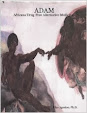

 Posts
Posts

