Showing posts with label Civil War. Show all posts

Wednesday, November 27, 2024

African Americans and Thanksgiving

By Onwubiko Agozino
"The year that is drawing toward its close has been filled with the blessings of fruitful fields and healthful skies. To these bounties, which are so constantly enjoyed that we are prone to forget the source from which they come, others have been added, which are of so extraordinary a nature that they cannot fail to penetrate and even soften the heart which is habitually insensible to the ever-watchful providence of Almighty God." – Abraham Lincoln, 1863.
Thanksgiving was first proclaimed as a national public holiday by Lincoln in 1863 soon after the emancipation proclamation to end slavery and to mobilize over two hundred thousand African Americans to help defend the Union. Was Lincoln thanking the Africans for helping to save the Union? During the 2024 Thanksgiving Holiday, I asked colleagues if President Abraham Lincoln was paying tribute to the contributions of people of African descent when he proclaimed the first national holiday for Thanksgiving Day in October 1863. 
    One response came from a Political Science Professor who stated: ‘No; I don't think Lincoln used the Thanksgiving proclamation to celebrate Black folks. But it's an interesting thought! ‘. Another from an Emeritus Professor of History said: ‘I think Lincoln was unifying the nation by superseding state Thanksgiving days with a national one. Virginia had a Thanksgiving in 1619, before the Massachusetts one that figures in the US’s historical myth of Thanksgiving. And there were sporadic, impermanent national Thanksgivings in the years between. 
    Many American Indian Natives do not celebrate Thanksgiving Day, they commemorate the Day of Mourning Genocide. Some African Americans and White liberals do not celebrate it either perhaps because of the commercialization of the holiday with Black Friday shopping frenzy. Do African Americans have any reasons to celebrate Thanksgiving Day even while also mourning the millions that were lost? Yes, everyone has something to be thankful for. We are not going back to the evil old days!
     See the transcripts of Lincoln's Thanksgiving Day Proclamation (epigraphed above) archived by the Obama White House. The proclamation came 9 months after the Emancipation Proclamation and after the freed Black men and women  changed the battle of the civil war fought over slavery. 
    The proclamation started by urging Americans to show some gratitude for the sources of the food they took for granted. What were the sources of the food and comforts of Americans? The land of the indigenous American Indians, their food crops and their animals deserve all the gratitude that Americans could express, American Indian Natives have continued to contest the mythology that their ancestors peacefully surrendered their land to the invaders and taught them how to grow food to save them from starving to death and from engaging in cannibalism to survive. The natives did not surrender their land and vanish, they were subjected to genocide by the ungrateful conquistadores. The US has since recognized the rightful owners of the land by reserving land for some of the surviving native tribes and nations while others still fight for recognition. 
    Women deserve thanksgiving too for they also provided, and prepared the bulk of, the food Americans took for granted. One of the early advocates of a national Thanksgiving holiday was the slavery abolitionist feminist writer, Sarah Hale, who allegedly wanted to recognize it as a whites-only holiday, probably to avoid opposition from white-supremacist men and women who wanted freed Africans to 'go back to where they came from'. The emancipated Africans defiantly stated that they and their descendants were here to stay, come what may, no matter what others say. 
     Lincoln made his historic proclamation at a conjuncture in history when the survival of the Union was in doubt due to the pro-slavery rebellion of the confederate states over the so-called ‘state right’ to expand slavery to the whole of the United States to end the dilemma of hunting for run-away enslaved people in the land of the free. Initially, Lincoln refused to allow people of African descent to join the Union army and stated that if he could keep the nation united without emancipating a single person from enslavement, he was prepared to do so. 
    He also proposed to repatriate the emancipated Africans to a colony island near Haiti. Eventually, he was forced by the circumstances of confederate battle victories to issue the Emancipation Proclamation on January 1, 1863, to weaken the economies of the confederate slave states and he welcomed formerly enslaved Africans to join the union army and help to defeat the confederacy. 
    Nine months later, the bravery of the former enslaved Africans in battle had turned the tide of the Civil War in favor of the Union Army and that was the context of the Thanksgiving Day proclamation. Two years later, in 1865, Lincoln made the Gettysburg Address to honor the troops who were wasted in the battlefield towards the end of the war.
"Needful diversions of wealth and of strength from the fields of peaceful industry to the national defense have not arrested the plow, the shuttle, or the ship; the ax has enlarged the borders of our settlements, and the mines, as well of iron and coal as of the precious metals, have yielded even more abundantly than heretofore. Population has steadily increased, notwithstanding the waste that has been made in the camp, the siege, and the battlefield, and the country, rejoicing in the consciousness of augmented strength and vigor, is permitted to expect continuance of years with large increase of freedom." Lincoln, 1863.
At the time of the proclamation, the labor of the enslaved Africans and the poor working class Whites was the main source of the food and industry that Americans took for granted. Lincoln did not make this explicit in his proclamation, of course not. He was saying Graces and giving thanks to ‘Providence’ the way you do even when you know that it was your papa and mama that produced and reproduced the food, goods, and services for your survival. 
     It might be a coincidence rather than a causation that X came before Y, Emancipation before Thanksgiving Day Proclamations in the same year during the Civil War, but there is absolutely no reason why Americans would not give thanks for the sacrifices that people of African descent made to build the nation in chains and defend it since then. 
     Every Day is Thanksgiving Day, let all Americans remember the sufferings of people of African descent in the country, say thanks to Providence for providing their livelihood, offer apologies to the descendants of the enslaved for the crimes against humanity that the country visited on them, and offer them a significant package of reparative justice. 
     The Obama White House, by archiving the transcripts of this proclamation by Lincoln, may have been calling for reflections on the centrality of African Americans in Lincoln’s Thanksgiving Day Proclamation of 1863. 
    There is no justification for the consensus that erased the African presence from the Thanksgiving narratives by the media, historians, sociologists, and poets. Congress should use every Thanksgiving Day celebration to authorize appropriations for the long overdue Reparations Proclamation and apology to people of African descent for the crimes of hundreds of years of enslavement that built the United States and defended the Union against pro-slavery rebellions.


Listen to President Joe Biden on 3 December, 2024 at the National Museum of Slavery in Angola as the first US president to visit the country. The US should be encouraged to use their bully pulpit to announce a reparative justice package for people of African descent and invite European states to contribute regarding what Biden called 'the original sin' (it is a crime against humanity and not simply a sin) of the US (and European countries, not the US alone), the enslavement of millions of Africans for hundreds of years:


Sunday, November 3, 2019

HARRIET AS IGBO


By Biko Agozino

This is not a spoiler. Harriet is a film without spoilers because the audience already can tell how the movie was going to end. What I would like to comment on are the symbolic representations that the Director, Kasi Lemmons, brought into the narrative that will not make sense to viewers who are not familiar with the background Igbo world views of both Harriet Tubman and the actress who played that role, Cynthia Chinasaokwu Erivo.


Some critics reportedly protested against the casting of the award-winning ‘British’ actress and singer to play the role of the iconic African American hero but if only the protesters knew that it is a case of an Igbo woman being portrayed by another Igbo woman... Besides African Americans have played the roles of Africans in Hollywood without protests from Africans who simply admire good acting by our black brothers and sisters.

There was a carving that the father of Minty, short for Araminta, gave her when she went to tell him that she was fleeing to freedom from slavery. She kept it with her always just as Frederick Douglas kept a piece of wood that an elderly enslaved man gave him after he was beaten by an overseer. According to Douglas, no one ever beat him again in his life for he kept that piece of wood with him, just as the old man told him. The Igbo call such a piece of wood or carving, Ofo na Ogu, the symbol of innocence and blessings. The Director, Kasi Lemmons, was probably reminding us throughout the movie that Harriet Tubman held Ofo and Ogu as a blessed innocent person and that that, in addition to her strong faith in God, was part of the reasons why she was bold in fighting for freedom from slavery for all, unlike Django who only went back to unchain his boo.

Harriet repeatedly claimed that she heard the voice of God but that was attributed, even by black abolitionists, to ‘possible brain damage’ from her head injury as a child when she was found in a barn with the white boy. The Igbo will agree with her claim that she heard the voice of God because the Igbo also believe that God is present in everyone as Chi, or God, a part of the Great God or Chiukwu, also known as Chineke, God the creator. Such a God or Chi would never subscribe to the pro-slavery gospel that the black preacher was paid to preach to the congregation of the enslaved who were called upon to obey their masters and work hard for them as an honor to a white God. Harriet did not say amen to that prayer.

It is a shame that the leading actress, Cynthia Erivo, chose to go by her English first name when her Igbo name would have been more appropriate to the role. Chinasaokwu, the name that her Igbo parents gave her in England when she was born, means God answers accusations. Just as Minty dropped her slave name and chose a free name, perhaps to evade slave catchers who continued to search for runaway enslaved people especially after the 1850 Fugitive Slave Act, Cynthia should be challenged by her fans to drop the slave name and adopt her Igbo name, Chinasa, as her first name in honor of Harriet if not in honor of her own family. Her real last name, Erivo, literally translates as the unfed or the starving, a strange name that echoes memories of the mass starvation of the Igbo in Biafra during which 3.1 million died. The actress owes it to herself to recover her Igbo name as her first name.

Incidentally, the name Harriet and her original slave name, Araminta, may have onomatopeic meanings in Igbo as Ha aya eti – they will never beat us and Ala mu nta - my little land, or Aninta, a common Igbo name. Hayeti is, by coincidence, similar to the name that the Haitian Igbo revolutionaries gave to their new republic – Ayeti – and that is the way they still spell it in creole today, like the way that Harriet said that people pronounced Rit, her mother's name that she took. It means in Igbo, they will never beat us. Even the name of the Director of this movie, Kasi, also transliterates in Igbo as to console, suggesting the consolation for those who have suffered great injustice without being offered reparative justice.

Moreover, the name Moses that was attributed to Harriet by almost everyone, may also have an Igbo-sounding meaning – Moshishi, or the spirit said to say. The enslavers could not believe that an African woman was capable of leading such daring raids to free the enslaved and lead them to freedom in their hundreds. They claimed that she was a white abolitionist in ‘black face’ which must have been a popular pastime of influential white men then and even now. 

The Harriet model of womanist activism can be found in Ogu Umunwanyi during which Igbo women declared war against colonialism in 1929, only sixteen years after Harriet passed away; the Abeokuta women’s rebellion against taxation in 1945, the Kikuyu women’s uprising against forced labor in the 1950s, the South African women’s defiance against the pass laws of apartheid in the 1950s, and the Liberian women’s praying of the devil back to hell to end the bloody civil war in the 1990s.

Unlike Western feminist activists who seek gender-separatism, the Africana womanists are exemplary in the sense that their demands always included the interests of suffering men and women in articulation or intersectionally instead of seeking divisive gender essentialism. This is part of the reasons why Professor Chikwenye Okonjo Ogunyemi theorized that womanism was more appropriate than feminism as a description of the interests of African women within cultures that also inevitably include men as allies who can also be opponents in some ways but cannot be pigeon-holed essentially as all the enemies of ‘womandom’. The film, Harriet, showed that not even all white men were enemies during slavery given the important role played by white abolitionists, though some white women were among the worst enslavers and some black men worked for the slave catchers to earn some money.

Harriet was fond of singing the freedom song, ‘Go down Moses, go down to Egypt land and tell old Pharaoh to let my people go’, as a rallying signal for the enslaved to join the underground railroad to freedom. The biblical Moses was called an Egyptian and so, Harriet was not a black Moses – the biblical Moses was obviously not white. The fact that Harriet was suspected to be a man goes to challenge the western invention of women as gendered in submissive relations under patriarchy whereas gender is not a central feature of the conception of people in African cultures where generation, not gender, is more deferential and hegemonic, according to Oyeronke Oyemumi in The Invention of Women.

Harriet carried a gun with her for protection and used it to threaten some of her own family members who were too scared to go with her to freedom. But when she had the opportunity to shoot and kill her enslavers, she chose not to kill. This may seem strange to many fans of Hollywood who have come to expect the hero to be a blood-thirsty maniac in Tarantino movies. However, to the Igbo who suffered genocide, pogroms and mass killings in Nigeria without resorting to retaliatory killings, it is normal to leave the gravest wrongs in the hands of our Chi and instead invest our energies into rebuilding our beloved communities in accordance with the African philosophy of nonviolence that Gandhi admitted that he was taught in Africa and Martin Luther King Jr. followed to lead the Civil Rights Movement.

A puzzle that the film tried to solve was why many poor whites who did not enslave Africans continued to fight in support of what the film called the ‘lost cause’ of slavery even after the Africans had asserted their right to freedom as fellow human beings. W.E.B. Du Bois explained this with the theory of the psychological wages of whiteness. However, the film differed slightly from the conventional interpretation of this theory by explaining that, according to Du Bois, it was not just psychological wages because there were huge structural privileges to even poor whites that they would like to defend; not to mention the hefty rewards placed on the heads of ‘Moses’ and the runaway enslaved people to motivate poor whites to join the posse to try and recapture them. Also, the young white men were motivated by their lust for the bodies of young black girls who were gang raped even ‘before their first blood’ perhaps because they were brought up to think of black girls as ‘pigs to be sold or eaten’ but never to be loved by white men who fathered children that looked exactly like them and still enslaved their own flesh and blood or sold them for money.

The film represented Harriet leading a unit of African American soldiers in battle during the Civil War at the historic Combahee River point of the Black Womanist Rebellion statement. This was the only time that a woman commanded men in battle during the civil war. It came to pass in fulfillment of the vision that Harriet shared with the young white man who was trying to recapture her as his property even though she prayed for him to survive typhoid as a child. She had disarmed him and made him climb down from his white horse, knelt him down and aimed his own rifle at him, and told him to listen to the coming sounds of the civil war even before the war started. She prophesied that he was going to die with thousands of other young white men fighting for a lost cause. Then she rode off on his white horse which did not discriminate between a white male rider and a black female rider. That war soon took an estimated 750,000 lives but it could have been avoided if white people simply accepted the fact that black people were equally human and not property. Injustice anywhere is a threat to justice everywhere.

 Dr. Agozino is a Professor of Sociology and Africana Studies at Virginia Tech.


Monday, November 26, 2018

Chibok Girls: According to Obama and Jonathan


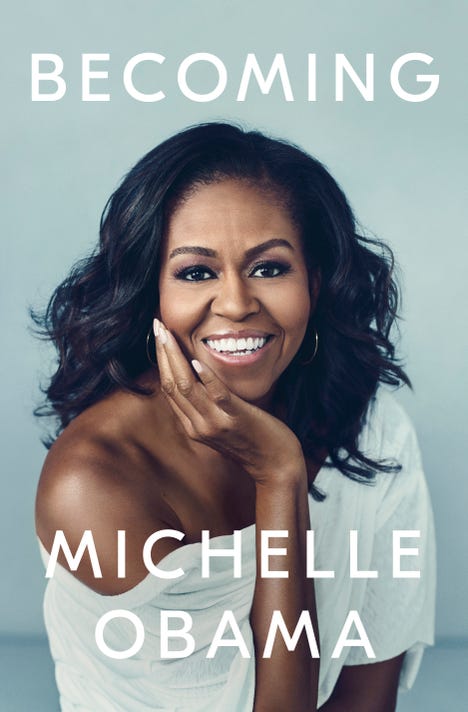
'I was horrified when, about six months after Malala’s visit, 276 Nigerian schoolgirls were kidnapped by the extremist group Boko Haram, seemingly intent on causing other Nigerian families to fear sending their daughters to school. It had prompted me, for the first and only time during the presidency, to sub for Barack during his weekly address to the nation, speaking emotionally about how we needed to work harder at protecting and encouraging girls worldwide.' Michelle Obama, Becoming.
Image result for becoming michelle obama tour
Top of Form


'Monday, April 15, 2014
01:00 Hours -
The notification came that heavily armed Boko Haram Islamists had arrived in open trucks and quietly abducted about two hundred girls from a boarding school in Chibok, Borno State in North-Eastern Nigeria, which is about two hours drive from Nigeria's border with Cameroon.' 
Jonathan, My Transition Hours. 


Front Cover

Oga Jona knew the exact hour but unlike Ms Obama, did not know exactly how many girls were kidnapped and was not sure exactly how far Chibok was from the border with Cameroon. Clueless?

A Professor cautioned me as follows: ‘Jonathan’s note is a diary entry on the day of the event. Nobody knew on the day of the event, and for quite a while after, exactly how many children were abducted, how many fled, how many died. Mrs. Obama’s is a recollection after the fact rather than a diary entry on the day of the incident. I’d say that explains the discrepancy. We all know now, if, indeed, we do, how many children were taken. Not to excuse Jonathan’s incompetence.’

I responded: ‘Bros, Jona still does not believe that any Chibok girl was kidnapped. He went on to suggest that the state governor arranged the whole thing as a scam, that even Chibok parents were not protesting until the US and Europe started pouring vitriol, that the principal of Chibok was promoted to Commissioner for Education, that the #bringbackourgirls were rewarded, that the first Chibok girls rescued were housed in govt house by the governor for weeks before being sent home with heavy pockets. Haba. What is he banging on about? He no dey shame?’

Professor again: ‘Biko you’re right. Problem, of course, is that when you consider his successor’s apparent lack of interest in the matter, it’s easy to see why the conspiracy theories have only grown stronger.’

I responded: True talk. Na the family of the mad man dey feel the shame. It is not an individual flaw.

A brother sympathizes with Jonathan: ‘the whole chibok girls issue was staged’
I responded:  The whole world is a stage.

Another brother intervenes: Prof, let's let the sleeping dog lie. It has become the responsibility of President Buhari to take care of this issue. If these girls were kidnapped where is the memo from the individual parents. I can't sit back and do nothing if my girls don't return. President GOODLUCK is a brave man when he relinquished power to Buhari regime who need to come up to speed.

I responded: Different issues you raise. My concern is that the ex President does not sound like someone in control when he used an estimated time to measure the distance to Cameroon when the actual distance can be specified by Google Maps. Ms Obama sounded like a commander in chief when she stood in for her husband. The problem of Jona is that of mediocrity. It would have cost him little to hire a professional editor to go over his wishy washy prose.

The brother changed the topic:  Obama and the wife were in power , did they do anything , just like they swiftly silenced Moumar Gadaffi of Libya, just thinking aloud.

I responded again to the brother: Still different issues from the intertextual reading of the two books published simultanously. Jona get Ph.D. but if he no sabi book, he could hire smart research assistants like you to ghost author for him. Abi na lie?

The brother attacked the straw man: What did Jona do to you, that his case is coming up now? Is it political? Can I get the books so I could get the gist and understand the big issue.

I responded: Bro …, Oga Jona no do me anything personally. You can buy his book and read it for yourself. He is entitled to his opinions but if he is not sure of his facts, then he should cite his sources for the readers to follow up. When he wrote that thousands of lives or hundreds of thousands of lives were lost in the civil war, I suspect that he is not good with research or he would have known that it was not soso thousands, it was millions upon millions, 3.1 million to be more exact, according to Herbert Ekwe-Ekwe. He could have cited sources to back up his understatement of the facts.

The brother concedes: I will agree with you, but don't be too harsh on him because he is writing on a subject alien to his area of specialization , the biological sciences. He actually has written a bad book! He may have to recall the publication, as a damage control effort, bet me.

I correct the brother, … na you be the harsh judge. How can you say that he has written a bad book if you are yet to read it? Even bad books deserve to be read and critiqued to make room for better books. Do not tell him to withdraw his book before you have read it for yourself o. For all you know, my critique of the book may be mistaken.
Bottom of Form