
By Biko Agozino
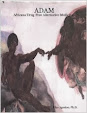
I received a signed copy of A Tribute To African Civilization (Atlanta, Sene Press, 1995) from the author, Kasala Kamara, on 10/11/2006 in St. Augustine, Trinidad and Tobago shortly after sharing a panel with him at the Center for Black Arts and Culture conference with delegates from Nigeria. He had just spoken about the energy sector and later that evening, the Honorable PM, Patrick Manning attended an evening reception where he promised to offer help in the energy sector to Nigeria. I shook hand with him later to commend him for the policy of publicly-funded university education for the citizens.
Some of the Nigerians came with samples of their produce - roasted groundnuts in plastic bottles but with a dose of sand. One wanted to know how he could export cashew nuts to Trinidad and Tobago. Did they not hear the Prime Minister offer help with energy sector? I asked myself. I had just arrived the country a few months earlier to take up a job as a Professor of Sociology at the University of the West Indies. Brother Kasala must have been impressed with my modest contributions as a chair of the panel in which he presented; for he wrote in the autograph to me: ‘To Brother Onwubiko Agozino Positive Vibrations’ and singed.
That was very touching for a reggae lover like me who understood what groundings with Rasta mean by positive vibration, popularized by Bob Marley and the Wailers in that iconic song. I purposively went to the Caribbean partly to reconnect with brothers and sisters whose ancestors were kidnapped from Africa for four hundred years without any expectations that we would survive and meet again, survivors of the slave raids and survivors of slavery, survivors all. And here was a brother I was meeting for the first time, and he called me, brother.

When I read the book, it struck me as an original contribution to knowledge in many different disciplines. Structured into five parts, the book covers in Part I, what is now a consensus among scholars in different disciplines that Africa is the genesis of civilization, science and technology. Such a thesis was argued by Cheikh Anta Diop in the 1950s with three successive Ph.D. dissertations before he was reluctantly passed in France. Like Diop, the author maintains that Black Africa built the ancient Egyptian civilization contrary to skepticism by Eurocentric authors. Kasala went beyond Diop’s theory of state building origins in Africa by delving into his own specialization in International Relations, in which he has published several other titles, to highlight the ancient African origin of diplomacy and international law.
Part II highlights the contributions of Africa to the development of world spirituality, morality, ethics and wisdom and how the African conception of God is related to other contributions to civilization. Part III profiles personalities like the Pharaoh, Akhenaton, and Imhotep, the first recorded multi-genius in the world who thrived in a civilization that respected the rights of women without slavery as a mode of production, without prisons, and without racism.
What jumped out at me most, as a criminologist, is Part IV where the author offers a definition of national security based on the welfare of the people and the roles of Africans in the development of humanism, the family and the wider world. I have cited this part of the book in several of my publications because of its alignment with the decolonization paradigm that I am credited as having helped to develop in criminology following my book on Black Women and the Criminal Justice System: Towards the Decolonisation of Victimisation and also in my book, Counter-Colonial Criminology: A Critique of Imperialist Reason.
In an editorial essay for the African Journal of Criminology and Justice Studies which I edit for the African Criminology and Justice Association, I answered the question: ‘What is Criminology?’ And I stated that it is ‘A Control-Freak Discipline’. I was invited back to The University of the West Indies, St. Augustine to present this paper as a Keynote Address for the International Conference on Penal Abolitionism. I was told by one of the organizers that the police officers attending were eager to challenge me, and I said to them, bring it on. When one lady officer objected that the national safety officers did not like being painted as the bad guys, I responded that the same bosses that pay them also pay us scholars but the difference is that we are hired to apply our critical thinking to the order of things while they have the mandate to impose order.
The Chief Judge of the Caribbean Court of Justice who chaired the session privately agreed with many of my recommendations. A radio DJ had made a joke earlier about my call for Reparative Justice by using it as the subject of his daily ‘Tings that make me vex’. This time, he interviewed me live on radio about my call on the Prime Minister to legalize marijuana as reported that morning in The Guardian, and I answered those who called in to say that it was a gate-way drug by asking them to help to take it out of the gate by making it legal.
One of the sources that supported my critique of the obsession with controlling others by criminologists is Kasala Kamara. I cited his revelation that in ancient Egypt, it was reported to the Pharaoh that the principality of Damascus was rebelling and demanding their independence from Egypt. The advisers recommended crushing the rebellion militarily to teach a lesson to other would-be rebels but the Pharaoh invited the rebellious prince to dinner instead.
After liming (feasting and philosophizing) with him in the royal palace, the rebel prince was asked what his people wanted. He answered that they wanted to be free to govern themselves by themselves. The Pharaoh shook his hands and told him to go and tell his people that they were now independent and free to rule themselves as they saw fit.
Compare that with the constant waging of wars through invasion, enslavement, colonization, genocide, and exploitation engaged in by the imperialist West for five hundred years at a huge cost in lives to poor Europeans who were used as cannon fodder around the world and also at home where militarized policing gave rise to the BlackLivesMatter movement worldwide. South Africa massacred poor people protesting the jailing of President Jacob Zuma for alleged 'state capture' while the proven criminals of apartheid land, gold, and diamond theft and mass murder are forgiven to walk free in a deeply corrupt South Africa.
By forgiving the rebels and granting their request for freedom, the rulers of ancient Egypt avoided putting the lives of their own soldiers at harm’s way and avoided creating enemies abroad through the mass killings of the loved ones of others. The wealth that could have been wasted in such wars were instead devoted to education, the development of canals, science, arts, architecture, medicine and philosophy in the longest lasting dynasties ever recorded in history.
I was also borrowing indirectly from this book when I Directed and Produced an award-winning documentary on the banning and eventual liberation of Shouters Baptist Faith in Trinidad and Tobago.
The documentary, ‘Shouters and the Control Freak Empire’ asked criminologists to explain what crimes the Shouters committed that made the colonial administration to proscribe them, arrest, and harass them just for praising God in their own bell-ringing ways. In accordance with the decolonization paradigm, I suggested that the Shouters were right to see themselves as people who were victimized and abused by the imperialist state for their freedom of conscience, a people who resisted non-violently by holding services secretly in the liberation struggle to regain their freedom, making them deserving of reparative justice. It premiered on Gayelle TV and later won the International Best Short Documentary Prize at the Columbia Gorge Film Festival, USA, 2011.
As I look back at the book and the author, I now understand better why he is named Kasala Kamara, which literally means in my Igbo language – complain (Kasala) and let it be known (Kamara), appropriate meanings for the rebellious Igbo man who led a rebellion in Guyana, and the common West African name for great teacher from whom he took his second name. However, the name could also be meaningful in other African languages.
I came to hear from those carrying commerce that he was one of the Sixth Form student activists who supported the 1970s Black Power revolution in the country to end discrimination against people of African descent. On graduation from the St. Augustine campus of UWI in 1975, he became one of the leaders of the National Joint Action Committee and the book emerged from his 30 part radio program series that he narrated in 1988 in his capacity as Director of the Caribbean Institute of Regional Affairs and International Relations in observance of African Liberation Day and with a commitment to the re-emergence of Africa as a leading world power. I heard that when the activists were rounded up and put on trial, a Nigerian genocidist army officer who led the genocide against the Igbo in Biafra (in which an estimated 3.1 million died in 30 months, 1967-1970) was said to have been seconded from Nigeria to be one of the military judges that tried the activists.
I heard that he recommended the death penalty as appropriate because that was what he would do in Nigeria to coup plotters. Prime Minister Eric Williams rejected the death penalty and all but forgave the activists while implementing some of their demands to see Africans hired as bank tellers or air hostesses in Trinidad and Tobago, the only country in the world where people of African descent are officially known as Africans.
The forgiveness of the unforgivable is common among people of African descent who went through slavery, colonialism, apartheid, neocolonialism, and internal colonialism without seeking revenge, only reparative justice i9n accordance with the Africana philosophy of forgiveness, compared to Abrahamic traditions that rule out the forgiveness of the unforgivable, according to Derrida. Such apparent forgiveness was not rare in the Caribbean for Fidel Castro was spared after the June 26 Movement failed to capture state power and he, in turn, forgave the captured Bay Of Pigs invaders and sent them back to the US whereas Che was executed after being wounded and taken prisoner.
Hugo Chavez was forgiven by Venezuela, the first country in the world to abolish the death penalty, and Chavez forgave the military officers who had briefly overthrown him. Granada has also released from the death row, members of the New Jewel Movement who had been sentenced to death for the killing of Prime Minister Maurice Bishop and others that prompted the US to invade the country. Mandela abolished the death penalty while the killers of Chris Hani were awaiting trial and possible sentencing to death. He launched the Truth and Reconciliation Commission to hear confessions and offer forgiveness, but no offers of reparative justice there.
Twenty years after the Black Power revolution in Trinidad and Tobago, the July 27, 1990 uprising by Muslimeen activists again rocked the government at the Red Building in Port of Spain. Instead of detaining the leaders without trial or assassinating them as was common practice across the world, the government went to court to try and evict the group from a piece of land that they were occupying without authorization.
If the government leaders had read this book by Kamara, they would have allowed the Muslimeen to occupy the land and grow their own dasheen or okra and things as they wanted. The government should not be evicting citizens from land where they want to grow food while the same government spends huge resources to import foreign food that the poor people may not be able to afford, or just not wanted by people who want to grow their own.
This book was at the back of my mind as a journalist, Nazma Muller, interviewed me for The Express Newspaper on policy options to reduce the mass violence in the beautiful country. I told her that the people were brutalized by history and so it was not surprising that they would be violent. I suggested that the government could help to reduce the violence by ending the death penalty which brutalizes the conscience of the people, as I argued in a paper written in the country; by ending the war on drugs which escalates violence, by legalizing sex work, abortion, and same sex marriage, the prohibition of which promotes toxic masculinity, and by offering reparations to the descendants of enslaved Africans who got nothing at the end of enslavement. The corrupt, brutal, neocolonial regimes in Nigeria have been prone to be overthrown despite the use of the death penalty as a punishment for failed frequent coups.
I heard that some preachers preached against me at church after reading the interview but if they had read this book by Kamara, they would have agreed with at least some of my recommendations. Someone reproduced the interview as a booklet with an artist impression of my interview photograph on the cover and with the title, The Big Bad Book, with copies sent to all the banks in the country, just for so. I was informed that a credit company used the article as the cover for their annual report on bad debts. Huh? Eventually, Prime Minister Keith Rowley bowed to reason by accepting the recommendation of the Caricom Cannabis Commission to decriminalize marijuana for medical uses. I hope that the people of Trinidad and Tobago will have the courage to push for full legalization of marijuana to allow poor women and men to grow it and sell it to tourists during carnival and thereby earn legitimate wealth from which they would pay taxes, as I argued in a written submission to the commission.
I hope that they will have the courage to abolish the death penalty as we recommended (in a joint paper with David Greenberg of New York University) published in the British Journal of Criminology. When the country of The Gambia proposed to execute 37 people at once, this paper was sent to them with the observation that it was the colonial administration that imposed the death penalty that African countries have retained long after the colonizers abolished it as barbaric in the metropole, partly because there is proof that it is not a deterrent. I hope that this was one of the reasons that made the government to suspend the mass execution. Ent (no be so)?
In agreement with the final Part V of the book on the present-day riches and potentials of Africa, I invited Kasala Kamara to guest teach my political sociology class for Graduate Students. The students evaluated his teaching to be of very high quality and if I had stayed longer in the country, I would have recommended that he should be hired as a permanent lecturer. Readers can support his work by asking their libraries to order copies for them if they cannot afford it. Students can also use inter-library loan to access the book and they can write to various departments on campus to raise funding to bring the author as a speaker by Zoom or in person. I recommend the book to all levels of readers.
Dr. Agozino is a Professor of Sociology and Africana Studies, Blacksburg, Virginia.



 Posts
Posts

